When learning Italian, one of the most fascinating aspects is how a single verb can take on dozens of meanings depending on the context. A prime example of this linguistic richness is the Italian verb “passare”. From expressing physical movement to emotional states, “passare” is a true chameleon in the Italian language. In this article, …
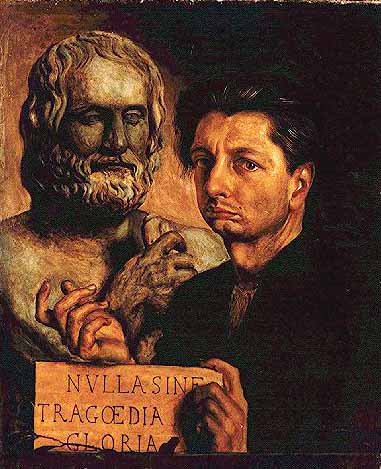
Il famoso Giorgio de Chirico ha dipinto un autoritratto in cui si mostra vicino al busto di Euripide (un drammaturgo greco vissuto fra il 485 e 407 a.C.) La scritta in latino nel quadro dice: “non c’è nessuna gloria senza tragedia”. De Chirico nel dipinto non sembra essere molto felice. Se tu adesso ti facessi un autoritratto come sarebbe? Sei felice?
The famous Giorgio de Chirico painted a self-portrait in which he appears next to the bust of Euripides (a Greek playwright who lived between 485 and 407 BC). The Latin inscription on the painting reads: “There is no glory without tragedy.” De Chirico doesn’t look particularly happy in the portrait. If you were to paint a self-portrait right now, what would it look like? Are you happy?
Learning Italian can be a fascinating journey, full of unexpected surprises. One of the most curious linguistic phenomena you’ll encounter is that of contronyms —words that carry opposite meanings depending on the context. While this may seem confusing at first, understanding these terms can actually deepen your command of the language and sharpen your interpretative …
This website uses Google Analytics to collect anonymous information such as the number of visitors to the site, and the most popular pages.
This website uses Pixel Facebook to better measure, optimize, and retarget our marketing campaigns.
This website uses AdSense to enable an analysis of the use of the website and to allow third party vendors, including Google, to use cookies to serve ads based on a user’s prior visits to this website or other websites.
Keeping these cookies enabled helps us improve our website.
Please enable Strictly Necessary Cookies first so that we can save your preferences!
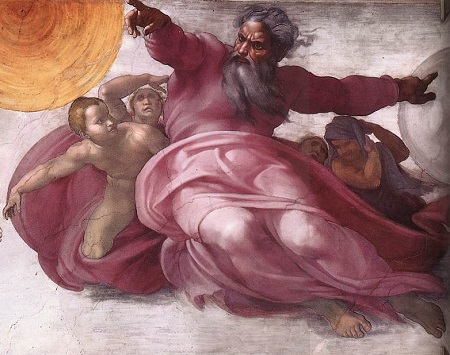
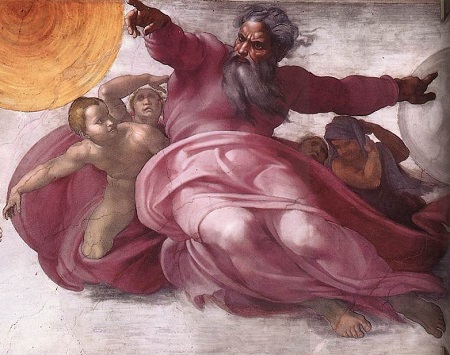
Creation of the stars, Michelangelo (1511 – 1512) Sistine Chapel, Rome (source wikipedia)
‘Verbo’, dal latino ‘verbum’ = ‘parola’. I verbi indicano un’azione o uno stato dell’essere e sono il punto di incontro fra la Parola e l’Azione. Fra la teoria e la pratica. Sei qualcuno a cui piace solo parlare o sei uno che agisce? Fai quello che dici? Puoi trasformare una parola in azione? Puoi coniugare i verbi italiani?
‘Verb’, from the Latin ‘verbum’ = ‘word’. Verbs indicate an action or a state of being, and are the meeting point between Word and Action. Between theory and practice. Are you someone who just likes to talk or do you take action? Do you walk your talk? Can you change a word into action? Can you conjugate Italian verbs?
Un tempo in Italia le “buone maniere” imponevano che se una persona offriva qualcosa si rispondesse “no grazie”. Alcuni continuano a seguire questa regola, mentre per altri dire di no è molto difficile. Tu sai dire di no in italiano? Se ti offrono qualcosa accetti sempre?
In the old days in Italy, “good manners” dictated that when a person offered you something you should say “no thank you.” Some people continue to follow this rule, while for others saying no is very difficult. Do you know how to say no in Italian? If they offer you something do you always accept?
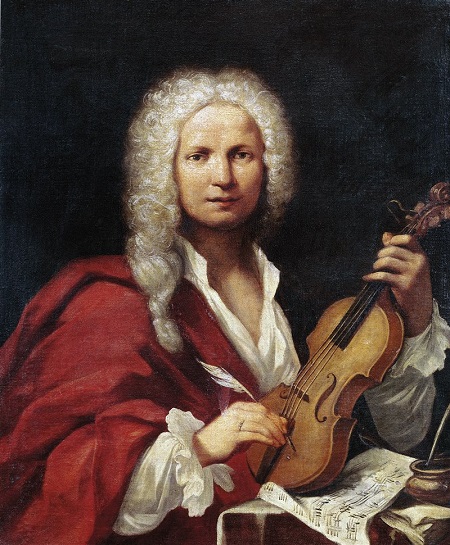
Anonimo: Ritratto presunto di Antonio Vivaldi (1700 circa) Bologna, Museo internazionalee biblioteca della musica (fonte immagine Wikipedia)
Cosa ha a che fare il grande musicista italiano Antonio Vivaldi con il tempo e le stagioni? Vediamo! Nel frattempo, puoi rispondere alle seguenti domande? Quale stagione preferisci? L’autunno, l’inverno, la primavera o l’estate? Perché?
What does the great Italian musician Antonio Vivaldi have to do with weather and seasons? Let’s see! In the meantime, can you reply to the following questions? Which season do you prefer? Autumn, winter, spring or summer? Why?
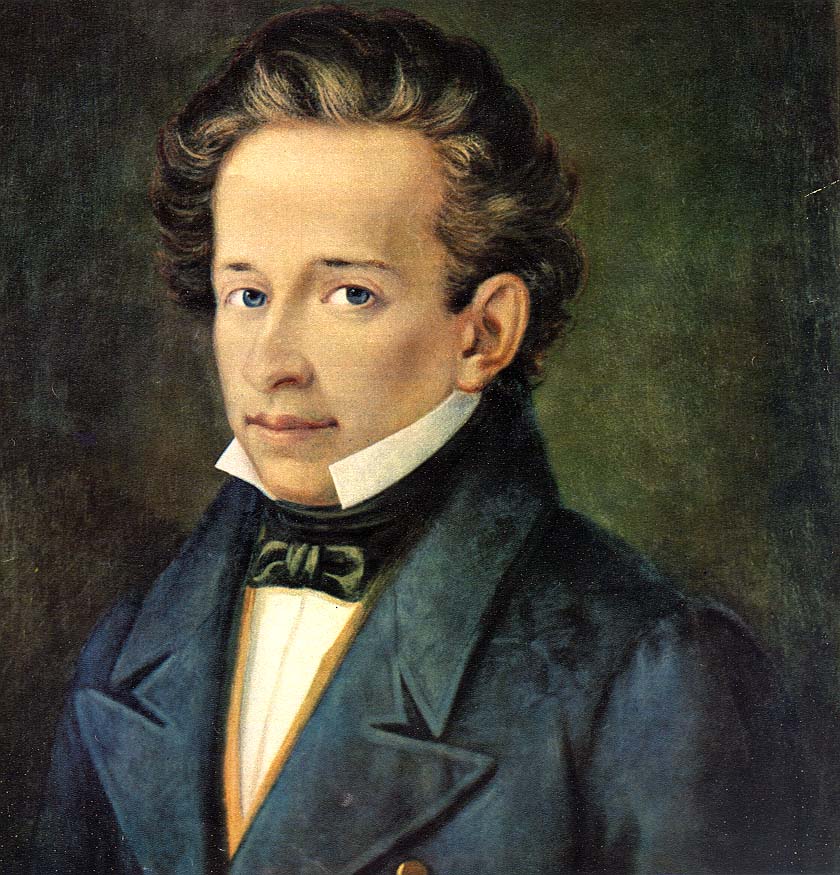
Il conte Giacomo Leopardi in un dipinto di Stanislao Ferrazzi (c. 1820)
Giacomo Leopardi è considerato uno dei più importanti poeti italiani. Nella sua famosa poesia L’infinito tratta il tema dell’immaginazione, che rappresenta anche la libertà. Ascolta L’infinito recitato da diversi attori. Quale versione preferisci? Tu hai molta immaginazione? Secondo te cos’è la libertà?
Giacomo Leopardi is considered one of the most important Italian poets. In his famous poem “L’infinito” (The Infinite) he explores the theme of imagination, which also represents freedom. Listen to “L’infinito” interpreted by different actors. Which version do you prefer? Do you have a lot of imagination? In your opinion, what is freedom?
At CyberItalian we believe that Italian language and culture offer us an opportunity to experience the quality of life. We are very interested in the development of the potential and talent that each human being has, and we like to give a true meaning to the word “educare” (to educate, to teach; from the Latin “ex-ducere”, to bring out). The best educational experience is the one that allows each person/student to express (bring out) the best of him/herself.
Our vision is to offer an effective, engaging and innovative method for learning the Italian language and culture, while encouraging the personal expression of each student.
Our mission is to promote the Italian language and culture in the world.
CyberItalian philosophy
At CyberItalian we believe that Italian language and culture offer us an opportunity to experience the quality of life. We are very interested in the development of the potential and talent that each human being has, and we like to give a true meaning to the word “educare” (to educate, to teach; from the Latin “ex-ducere”, to bring out). The best educational experience is the one that allows each person/student to express (bring out) the best of him/herself.
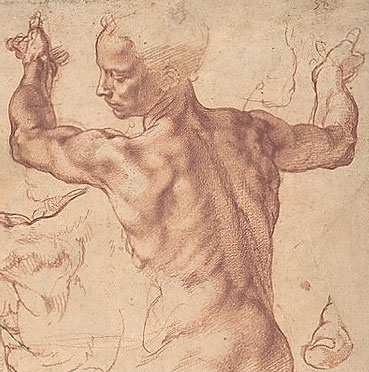
Michelangelo, studio per la Sibilla Libica. 1510-1511 circa, The Metropolitan Museum of Art, New York Nota i muscoli di questa giovane fanciulla!
“Mi sento un pezzo di legno”. Questo è ciò che una persona italiana dice quando “si sente rigida”, non fa “stretching” (allungamenti) da molto tempo né esercizi di riscaldamento prima di iniziare un’attività sportiva. Pinocchio tutte le mattine si alza e dice: “mi sento un pezzo di legno!” Allora inizia a fare ginnastica. Dieci minuti tutte le mattine sono un “toccasana”. E tu? Fai ginnastica tutti i giorni?
“Mi sento un pezzo di legno” (I feel like a piece of wood). This is what Italian people say when they “feel stiff”, they haven’t stretched for a long time or warmed-up before a physical activity. Every morning Pinocchio wakes up and says: ‘I feel like a piece of wood!’ Therefore he starts stretching. Ten minutes a day is a miracle cure. And you? Do you exercise every day?