برچسب: and

  • Io e i miei amici (My friends and I) – Cyber Italian Blog

    Io e i miei amici (My friends and I) – Cyber Italian Blog

    [ad_1]


    Gli “aggettivi” sono parole che descrivono.
    Quanti aggettivi nella tua lingua sono simili ad aggettivi italiani? Ad esempio: “nervoso, curioso, intellettuale…”.
    Certe parole ci fanno capire quanto i popoli siano “interrelati” gli uni con gli altri.
    Siamo “amici” anche senza saperlo.
    Hai tanti amici tu?

    “Adjectives” are words that describe.
    How many adjectives in your language are similar to Italian ones? For example: nervous, curious, intellectual…
    Certain words show us how much different peoples are connected to one another.
    We’re “friends” even without knowing it.
    Do you have many friends?

    To practice Italian, in this activity we invite you to listen and play…
    PRACTICE HERE: Italian/English Version

    Para practicar el idioma italiano, en esta actividad te invitamos a escuchar y jugar…
    PRACTICA AQUÍ: Versión Italiano/Española

    Picture source 123rf


    [ad_2]

    Source link

  • Core Words: How to Say “Now,” “Usually,” and More!

    Core Words: How to Say “Now,” “Usually,” and More!

    [ad_1]

    Hi everybody, my name is Seda. Welcome to the 2000 Core Turkish Words and Phrases video series! Each lesson will help you learn new words, practice, and review what you’ve learned. Ok! Let’s get started! First is… WORD 1 (NORMAL SPEED) Tüm gün (NORMAL SPEED) “all day” (NORMAL SPEED) Tüm gün (SLOW) Tüm gün (NORMAL SPEED) “all day” (NORMAL SPEED) tüm gün boyunca (NORMAL SPEED) “all day long” (SLOW) tüm gün boyunca WORD 2 (NORMAL SPEED) gece vakti (NORMAL SPEED) “nighttime” (NORMAL SPEED) gece vakti (SLOW) gece vakti (NORMAL SPEED) “nighttime” (NORMAL SPEED) şehrin gece vakti manzarası (NORMAL SPEED) “nighttime view of the city” (SLOW) şehrin gece vakti manzarası WORD 3 (NORMAL SPEED) gündüz (NORMAL SPEED) “daytime” (NORMAL SPEED) gündüz (SLOW) gündüz (NORMAL SPEED) “daytime” (NORMAL SPEED) Gündüz vakti uyuyamıyorum. (NORMAL SPEED) “I just can’t sleep during the daytime.” (SLOW) Gündüz vakti uyuyamıyorum. WORD 4 (NORMAL SPEED) sonra (NORMAL SPEED) “after” (NORMAL SPEED) sonra (SLOW) sonra (NORMAL SPEED) “after” (NORMAL SPEED) Sınıf dağıldıktan sonra annesini aradı. (NORMAL SPEED) “He called her mother after the class was over.” (SLOW) Sınıf dağıldıktan sonra annesini aradı. WORD 5 (NORMAL SPEED) bundan böyle (NORMAL SPEED) “from now on” (NORMAL SPEED) bundan böyle (SLOW) bundan böyle (NORMAL SPEED) “from now on” (NORMAL SPEED) Bundan böyle bilgisayarlar hayatımızda olacak. (NORMAL SPEED) “Computers will be in our lives from now on.” (SLOW) Bundan böyle bilgisayarlar hayatımızda olacak. WORD 6 (NORMAL SPEED) önce (NORMAL SPEED) “before” (NORMAL SPEED) önce (SLOW) önce (NORMAL SPEED) “before” (NORMAL SPEED) işten önce (NORMAL SPEED) “before work” (SLOW) işten önce WORD 7 (NORMAL SPEED) şimdi (NORMAL SPEED) “now” (NORMAL SPEED) şimdi (SLOW) şimdi (NORMAL SPEED) “now” (NORMAL SPEED) Şimdi ne yapmak istiyorsun? (NORMAL SPEED) “What do you want to do now?” (SLOW) Şimdi ne yapmak istiyorsun? WORD 8 (NORMAL SPEED) sık sık (NORMAL SPEED) “often” (NORMAL SPEED) sık sık (SLOW) sık sık (NORMAL SPEED) “often” (NORMAL SPEED) sık sık fazla uyumak (NORMAL SPEED) “often oversleep” (SLOW) sık sık fazla uyumak WORD 9 (NORMAL SPEED) genellikle (NORMAL SPEED) “usually” (NORMAL SPEED) genellikle (SLOW) genellikle (NORMAL SPEED) “usually” (NORMAL SPEED) genellikle geç (NORMAL SPEED) “usually late” (SLOW) genellikle geç WORD 10 (NORMAL SPEED) kış (NORMAL SPEED) “winter” (NORMAL SPEED) kış (SLOW) kış (NORMAL SPEED) “winter” (NORMAL SPEED) Kış mevsimi en kısa ve en soğuk günlerin yaşandığı bir mevsimdir. (NORMAL SPEED) “Winter is the season of shortest days and coldest temperatures.” (SLOW) Kış mevsimi en kısa ve en soğuk günlerin yaşandığı bir mevsimdir. PRACTICE/REVIEW Let’s review. Respond to the prompts by speaking aloud. First, you will hear a word or phrase in English. Respond in Turkish, then repeat after me, focusing on pronunciation. Ready? (Do you remember how to say “all day?” Review 1) (3) (2) (1) Tüm gün (1) Tüm gün (And how to say “nighttime?” Review 2) (3) (2) (1) gece vakti (1) gece vakti (What about “daytime?” Review 3) (3) (2) (1) gündüz (1) gündüz (Do you remember how to say “after?” Review 4) (3) (2) (1) sonra (1) sonra (Let’s try “from now on!” Review 5) (3) (2) (1) bundan böyle (1) bundan böyle (What about “before?” Review 6) (3) (2) (1) önce (1) önce (Now, let’s see if you remember how to say “now!” Review 7) (3) (2) (1) şimdi (1) şimdi (Another one! What about “often?” Review 8) (3) (2) (1) sık sık (1) sık sık (Do you remember how to say “usually?” Review 9) (3) (2) (1) genellikle (1) genellikle (And finally, do you remember how to say “winter?” Review 10) (3) (2) (1) kış (1) kış Well done! See you next time! Güle güle.


    [ad_2]

    Source link

  • How to Ask for Something at a Store – Examples and Variations

    How to Ask for Something at a Store – Examples and Variations

    [ad_1]

    Let’s look at some examples. Listen and repeat or speak along with the native speakers. Это, пожалуйста. (Eto, pozhaluysta.) Это, пожалуйста. (Eto, pozhaluysta.) То, пожалуйста. (To, pozhaluysta.) То, пожалуйста. (To, pozhaluysta.) Эти, пожалуйста. (Eti, pozhaluysta.) Эти, пожалуйста. (Eti, pozhaluysta.) Те, пожалуйста. (Te, pozhaluysta.) Те, пожалуйста. (Te, pozhaluysta.) Это и то, пожалуйста. (Eto i to, pozhaluysta.) Это и то, пожалуйста. (Eto i to, pozhaluysta.) Did you notice how I used a different sentence pattern? Это и то, пожалуйста. (Eto i to, pozhaluysta.) “This and that, please.” I used the words это (eto) and то (to) together. Это (Eto). “This.” Это. То (To). “That.” То. When requesting multiple items, you can join them with the conjunction, и (i), meaning “and.” И (I). “And.” И. Это и то, пожалуйста. (Eto i to, pozhaluysta.) “This and that, please.” то (to) “That” то то эти (eti). “these” эти эти те (te) “those” те те


    [ad_2]

    Source link

  • L’uomo vitruviano e l’equilibrio (The Vitruvian man and balance ) – Cyber Italian Blog

    L’uomo vitruviano e l’equilibrio (The Vitruvian man and balance ) – Cyber Italian Blog

    [ad_1]


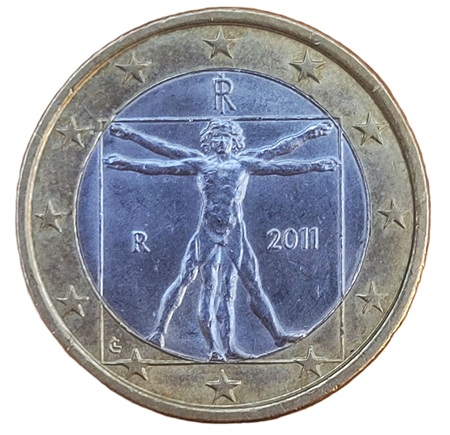
    Why does the Vitruvian man by Leonardo da Vinci
    appear on the Italian one-euro coins?

    L’Uomo Vitruviano è un famoso disegno di Leonardo da Vinci (1490 circa), simbolo dell’arte rinascimentale. Questo intrigante capolavoro rappresenta le proporzioni ideali del corpo umano, basate sugli studi dell’architetto romano Vitruvio, e mostra una forte relazione fra la geometria e il corpo umano.
    Ma perché questo disegno appare sulle monete da 1 euro italiane?

    The Vitruvian man is Leonardo da Vinci’s famous drawing from around 1490, and one of the icons of Renaissance art. This fascinating masterpiece captures the “perfect” proportions of the human body, inspired by the work of the Roman architect Vitruvius, and shows just how closely geometry and the human form are linked.
    But why does this drawing show up on Italian one-euro coins?

    To practice Italian this week we invite you to read…
    PRACTICE HERE: Italian/English Version

    Para practicar el idioma italiano esta semana te invitamos a leer…
    PRACTICA AQUÍ: Versión Italiano/Española


    [ad_2]

    Source link

  • Italy’s weird Towns: Discovering La Scarzuola, Colobraro and Calcata

    Italy’s weird Towns: Discovering La Scarzuola, Colobraro and Calcata

    [ad_1]

    When travelers dream of Italy, they often think of the romantic canals of Venice, the Colosseum in Rome, or the rolling hills of Tuscany. But hidden among the better-known gems are some truly bizarre, magical, and mysterious places. If you’re looking to get off the beaten path, explore the eccentric, or just love a good …

    The post Italy’s weird Towns: Discovering La Scarzuola, Colobraro and Calcata appeared first on Sos Italian – Learn Italian online.

    [ad_2]

    Source link

  • Core Words: How to Say “Cold Medicine,” “Coffee Table,” and More!

    Core Words: How to Say “Cold Medicine,” “Coffee Table,” and More!

    [ad_1]

    Hi everybody, my name is Thomas. Welcome to the 2000 Core Dutch Words and Phrases video series! Each lesson will help you learn new words, practice, and review what you’ve learned. Ok! Let’s get started! First is… WORD 1 (NORMAL SPEED) verkoudheidsmedicijn (NORMAL SPEED) “cold medicine” (NORMAL SPEED) verkoudheidsmedicijn (SLOW) verkoudheidsmedicijn (NORMAL SPEED) “cold medicine” (NORMAL SPEED) een dosis verkoudheidsmedicijn (NORMAL SPEED) “serving of cold medicine” (SLOW) een dosis verkoudheidsmedicijn WORD 2 (NORMAL SPEED) voetsteun (NORMAL SPEED) “footrest” (NORMAL SPEED) voetsteun (SLOW) voetsteun (NORMAL SPEED) “footrest” (NORMAL SPEED) Ik rust mijn benen op de voetsteun voor mijn stoel. (NORMAL SPEED) “I rest my legs on the footrest sitting in front of my chair.” (SLOW) Ik rust mijn benen op de voetsteun voor mijn stoel. WORD 3 (NORMAL SPEED) nachtkastje (NORMAL SPEED) “nightstand” (NORMAL SPEED) nachtkastje (SLOW) nachtkastje (NORMAL SPEED) “nightstand” (NORMAL SPEED) Ik heb een foto van mijn vrouw op mijn nachtkastje. (NORMAL SPEED) “I keep a picture of my wife on my nightstand.” (SLOW) Ik heb een foto van mijn vrouw op mijn nachtkastje. WORD 4 (NORMAL SPEED) koffietafel (NORMAL SPEED) “coffee table” (NORMAL SPEED) koffietafel (SLOW) koffietafel (NORMAL SPEED) “coffee table” (NORMAL SPEED) Hou je voeten van de koffietafel alsjeblieft. (NORMAL SPEED) “Please keep your feet off the coffee table.” (SLOW) Hou je voeten van de koffietafel alsjeblieft. WORD 5 (NORMAL SPEED) bank (NORMAL SPEED) “sofa” (NORMAL SPEED) bank (SLOW) bank (NORMAL SPEED) “sofa” (NORMAL SPEED) woonkamerbank (NORMAL SPEED) “living room sofa” (SLOW) woonkamerbank WORD 6 (NORMAL SPEED) stoel (NORMAL SPEED) “chair” (NORMAL SPEED) stoel (SLOW) stoel (NORMAL SPEED) “chair” (NORMAL SPEED) Wanneer je in een comfortable stoel zit, studeer je makkelijker. (NORMAL SPEED) “It is easier to study when you are sitting in a comfortable chair.” (SLOW) Wanneer je in een comfortable stoel zit, studeer je makkelijker. WORD 7 (NORMAL SPEED) eettafel (NORMAL SPEED) “dinner table” (NORMAL SPEED) eettafel (SLOW) eettafel (NORMAL SPEED) “dinner table” (NORMAL SPEED) De eettafel is gedekt. (NORMAL SPEED) “The dinner table is set.” (SLOW) De eettafel is gedekt. WORD 8 (NORMAL SPEED) tafel (NORMAL SPEED) “table” (NORMAL SPEED) tafel (SLOW) tafel (NORMAL SPEED) “table” (NORMAL SPEED) Aan de keukentafel doen we ons huiswerk en spelen we spelletjes. (NORMAL SPEED) “We do homework and play games at the kitchen table.” (SLOW) Aan de keukentafel doen we ons huiswerk en spelen we spelletjes. WORD 9 (NORMAL SPEED) studeren (NORMAL SPEED) “study” (NORMAL SPEED) studeren (SLOW) studeren (NORMAL SPEED) “study” (NORMAL SPEED) samen studeren (NORMAL SPEED) “study together” (SLOW) samen studeren WORD 10 (NORMAL SPEED) kelder (NORMAL SPEED) “basement” (NORMAL SPEED) kelder (SLOW) kelder (NORMAL SPEED) “basement” (NORMAL SPEED) donkere kelder (NORMAL SPEED) “dark basement” (SLOW) donkere kelder PRACTICE/REVIEW Let’s review. Respond to the prompts by speaking aloud. First, you will hear a word or phrase in English. Respond in Dutch, then repeat after me, focusing on pronunciation. Ready? (Do you remember how to say “cold medicine?” Review 1) (3) (2) (1) verkoudheidsmedicijn (1) verkoudheidsmedicijn (And how to say “footrest?” Review 2) (3) (2) (1) voetsteun (1) voetsteun (What about “nightstand?” Review 3) (3) (2) (1) nachtkastje (1) nachtkastje (Do you remember how to say “coffee table?” Review 4) (3) (2) (1) koffietafel (1) koffietafel (Let’s try “sofa!” Review 5) (3) (2) (1) bank (1) bank (What about “chair?” Review 6) (3) (2) (1) stoel (1) stoel (Now, let’s see if you remember how to say “dinner table!” Review 7) (3) (2) (1) eettafel (1) eettafel (Another one! What about “table?” Review 8) (3) (2) (1) tafel (1) tafel (Do you remember how to say “study?” Review 9) (3) (2) (1) studeren (1) studeren (And finally, do you remember how to say “basement?” Review 10) (3) (2) (1) kelder (1) kelder Well done! See you next time! Tot ziens.


    [ad_2]

    Source link

  • How to Use Parting Phrases and Expressions

    How to Use Parting Phrases and Expressions

    [ad_1]

    Welcome to Can-Do Russian by RussianPod101.com. In this lesson, you’ll learn how to use parting expressions in Russian. For example, “Goodnight” is Спокойной ночи. (Spokoynoy nochi.) Marina Maslova is talking with her former colleague, Rose Reznikova . As Marina says goodbye, her children join her in saying goodnight. Before you hear their conversation, let’s preview some of its key components. До скорого! (Do skorogo!) “See you soon!” До скорого! До скорого! Спокойной ночи. (Spokoynoy nochi.) “Goodnight” Спокойной ночи. Спокойной ночи. Доброй ночи! (Dobroy nochi!) “Goodnight” Доброй ночи! Доброй ночи! До встречи. Пока! (Do vstrechi. Poka!) “See you. Bye!” До встречи. Пока! До встречи. Пока! Focus on the way each person says goodbye. До скорого! (Do skorogo!) Спокойной ночи. (Spokoynoy nochi.) Доброй ночи! (Dobroy nochi!) До встречи. Пока! (Do vstrechi. Poka!) Once more with the English translation. До скорого! (Do skorogo!) “See you soon!” Спокойной ночи. (Spokoynoy nochi.) “Goodnight.” Доброй ночи! (Dobroy nochi!) “Goodnight!” До встречи. Пока! (Do vstrechi. Poka!) “See you. Bye!” Let’s break down each of these expressions. First, do you remember how Milena says, “See you soon!” До скорого! (Do skorogo!) This starts with до (do), meaning “until.” До . До. Next is скорого (skorogo), meaning something like “upcoming,” in this context. Скорого . Скорого. Note скорого (skorogo) is from скорый (skoryy), meaning “upcoming.” Скорый (Skoryy). Together, до скорого (do skorogo) means something like “until the upcoming,” but translates as “See you soon.” До скорого! (Do skorogo!) Note, до скорого (do skorogo) is a shortened form of the expression до скорого свидания (do skorogo svidaniya) literally “until upcoming appointment,” but translates as “until the coming appointment.” До скорого свидания (Do skorogo svidaniya). When using this expression, свидание (svidaniye), “appointment,” is usually omitted. До скорого! (Do skorogo!) До скорого (Do skorogo) is fairly informal, which indicates a close relationship between Milena and Rose Reznikova , her former colleague. Do you remember how Marina says, “Goodnight.” Спокойной ночи. (Spokoynoy nochi.) “Goodnight.” Спокойной ночи. Спокойной ночи (Spokoynoy nochi), literally means “[have a] restful night.” Спокойной ночи . Спокойной ночи. (Spokoynoy nochi.) And do you remember how Mikhail says, “Goodnight.” Доброй ночи! (Dobroy nochi!) “Goodnight!” Доброй ночи! Доброй ночи (Dobroy nochi), literally “[have a] Goodnight,” but it translates as “Goodnight.” Доброй ночи! Both expressions used by Marina and Mikhail are used to say goodnight to Rose. You use спокойной ночи (spokoynoy nochi), “Goodnight,” when you don’t plan on seeing someone again that night, and when someone is about to go to bed. It’s like saying “have a goodnight’s sleep.” It’s very informal, and rather used with people you are close to. Do you remember how Rose says? “See you. Bye!” До встречи. Пока! (Do vstrechi. Poka!) “See you. Bye!” До встречи. Пока! First is до встречи (do vstrechi), “See you.” До встречи. This starts with до (do), which means “until” in this context. До . До. After this is встречи (vstrechi), “meeting.” Встречи . Встречи. Together, До встречи (Do vstrechi), literally “until meeting [you again],” but translates as “See you.” Note: До встречи (Do vstrechi) is an informal parting greeting, and you should avoid it in a formal situation. Next is пока (poka), “bye.” Пока . Пока. All together, До встречи. Пока! (Do vstrechi. Poka!) “See you. Bye!” До встречи. Пока! (Do vstrechi. Poka!) This sentence is informal. Rose uses this to say goodbye to everyone. She’s the most senior person in the conversation, and she uses informal language to sound friendly. The following expressions are used when you expect to see the person, or people, again in the near future, such as this week or the following week: До встречи (Do vstrechi), “See you.” До скорой встречи (Do skoroy vstrechi), “See you soon.” Увидимся (Uvidimsya), “See you.” When parting, it’s not unusual for speakers to add an additional good-bye phrase to their parting greeting. For example, Всего доброго (Vsego dobrogo) or Всего хорошего (Vsego khoroshego), literally “all of good,” but it translates as “all the best.” Бывай здоров(а) (Byvay zdorov(a)), literally, “be healthy,” but it translates as “take care.” Note: Бывай здоров, is kind of old-fashioned, and it’s often shortened to бывай (byvay). There is an interesting Russian expression worth mentioning: Прощай (Proshchay), meaning “farewell.” You use this phrase when you do not expect to see someone ever again. In colloquial language, Russians often add давай (davay) to good-bye phrases. For example, Давай, пока (Davay, poka). “Bye.” Давай, пока . Literally, давай is a command meaning “give.” Adding давай (davay) does not change the meaning of the greeting. Let’s look at some examples. Listen and repeat or speak along with the native speaker. До скорого! (Do skorogo!) “See you soon!” До скорого! (Do skorogo!) Спокойной ночи. (Spokoynoy nochi.) “Goodnight.” Спокойной ночи. (Spokoynoy nochi.) До встречи. (Do vstrechi.) “See you.” До встречи. (Do vstrechi.) Пока! (Poka!) “Bye!” Пока! (Poka!) Доброй ночи! (Dobroy nochi.) “Goodnight!” Доброй ночи! (Dobroy nochi.) До свидания. (Do svidaniya.) “Goodbye.” До свидания. (Do svidaniya.) Did you notice the last parting expression? До свидания. (Do svidaniya.) “Goodbye.” This starts with до (do), “until” in this context. До. Next is свидания (svidaniya). “Appointment.” Свидания . Свидания. Together it’s до свидания (Do svidaniya), “goodbye.” До свидания.. До свидания. You can use this greeting in all situations, no matter if you plan to meet the person again or not. It can be used in formal and informal situations. До свидания (Do svidaniya). Let’s review. Respond to the prompts by speaking aloud. Then repeat after the native speaker, focusing on pronunciation. Ready? Do you remember how to say, “See you soon!” До скорого! (Do skorogo!) До скорого! (Do skorogo!) And how Marina says, “Goodnight.” Спокойной ночи. (Spokoynoy nochi.) Спокойной ночи. (Spokoynoy nochi.) Do you remember how Mikhail says, “Goodnight.” Доброй ночи. (Dobroy nochi.) Доброй ночи. (Dobroy nochi.) Do you remember how to say, “See you.” До встречи. (Do vstrechi.) До встречи. (Do vstrechi.) And how to say, “Bye!” Пока! (Poka!) Пока! (Poka!) Do you remember how to say, “See you. Bye!” До встречи. Пока! (Do vstrechi. Poka!) До встречи. Пока! (Do vstrechi. Poka!) Let’s practice. Imagine you’re Miroslav Maslov , and you’re talking with Rose Reznikova . Respond by saying “Goodnight.” Ready? До встречи. Пока! (Do vstrechi. Poka!) Спокойной ночи. (Spokoynoy nochi.) Listen again and repeat. Спокойной ночи. (Spokoynoy nochi.) Спокойной ночи. (Spokoynoy nochi.) Let’s try another. Imagine you’re Mikhail Maslov , and you’re finishing class. Respond by saying “Bye!” Ready? Пока. (Poka.) Пока! (Poka!) Listen again and repeat. Пока! (Poka!) Пока! (Poka!) Let’s try one more. Imagine you’re Marina Maslova , and you’re finishing coffee with your college friend, Natalia . Respond by saying “See you.” Ready? До скорого! (Do skorogo!) До встречи. (Do vstrechi.) Listen again and repeat. До встречи. (Do vstrechi.) До встречи. (Do vstrechi.) In this lesson, you learned how to use basic parting greetings in Russian. This plays an essential role in the larger skill of using basic greetings. Let’s review. Do you remember the polite way to say “Hello?” Здравствуйте (Zdravstvuyte) Здравствуйте (Zdravstvuyte) Do you remember how to say, “Good evening?” Добрый вечер. (Dobryy vecher.) Добрый вечер. (Dobryy vecher.) Imagine you’re Marina Maslova , and you’re meeting your friend Natalia Ivanova in the morning, after a short small talk you part your ways. Do you remember the informal way to say “Hello?” Привет! (Privet!) Привет! (Privet!) Respond to your friend Natalia greeting you first. Привет! (Privet!) Привет! (Privet!) Listen again, and repeat. Привет! (Privet!) Привет! (Privet!) And do you remember how to say “Bye?” Пока! (Poka!) Пока! (Poka!) Respond to Natalia Ivanova . Пока. (Poka.) Пока! (Poka!) Listen again, and repeat. Пока! (Poka!) Пока! (Poka!) Well done! This is the end of the lesson and the Can Use Basic Greetings unit of this course. Remember, these Can Do lessons are about learning practical language skills. What’s next? Show us what you can do. When you’re ready, take your assessment. You can take it again and again, so try anytime you like. Our teachers will assess it, and give you your results. Keep practicing — and move on to the next lesson!


    [ad_2]

    Source link

  • How to Ask for a Word in Russian – Examples and Variations

    How to Ask for a Word in Russian – Examples and Variations

    [ad_1]

    Let’s look at some examples. Listen and repeat or speak along with the native speakers. Как будет “book” на русском? (Kak budet “book” na russkom?) Книга. (Kniga.) Как будет “book” на русском? (Kak budet “book” na russkom?) Как будет “pen” на русском? (Kak budet “pen” na russkom?) Ручка. (Ruchka.) Как будет “pen” на русском? (Kak budet “pen” na russkom?) Как будет “bag” на русском? (Kak budet “bag” na russkom?) Сумка. (Sumka.) Как будет “bag” на русском? (Kak budet “bag” na russkom?) Как будет “pencil” по-русски? (Kak budet “pencil” po-russki?) Карандаш. (Karandash.) Как будет “pencil” по-русски? (Kak budet “pencil” po-russki?) Как сказать “How are you?” по-русски? (Kak skazat’ “how are you?” po-russki?) Как дела? (Kak dela?) Как сказать “How are you?” по-русски? (Kak skazat’ “how are you?” po-russki?) Did you notice how I used a different sentence pattern? Как сказать “How are you?” по-русски? (Kak skazat’ “How are you” po-russki?) How do you say ‘How are you?’ in Russian? Как сказать “How are you?” по-русски? (Kak skazat’ “How are you?” po-russki?) First is Как (Kak), “How.” Как. Next is сказать (skazat’), “to say”. Сказать. Сказать. Together, Как сказать, literally “how to say,” but translates as “How do you say…” Как сказать. Next is the English phrase, “How are you?” After this is по-русски (po-russki), “in Russian”. По-русски. По-русски. All together, Как сказать “How are you?” по-русски? (Kak skazat’ “How are you?” po-russki?), literally, “How to say ‘How are you’ in Russian? But it translates as “How do you say ‘How are you?’ in Russian?” The pattern is, Как сказать “ENGLISH” по-русски? (Kak skazat’ “ENGLISH” po-russki?) How do you say “ENGLISH” in Russian? To use this pattern, simply replace the ENGLISH placeholder with the phrase you want to know. Note, this pattern is usually used to ask for the translation of longer phrases. This is a very useful pattern for using Russian to learn Russian. Remember this pattern. You will need it for this lesson.


    [ad_2]

    Source link

  • Estate italiana – esercizio di ascolto e pronuncia (Italian summer – listening and pronunciation exercise) – Cyber Italian Blog

    Estate italiana – esercizio di ascolto e pronuncia (Italian summer – listening and pronunciation exercise) – Cyber Italian Blog

    [ad_1]


    ESTATE: sicuramente un momento interessante per andare in Italia. Alcuni ti diranno che la primavera è meglio, perché è meno calda, meno affollata e i prezzi sono più bassi. Probabilmente hanno ragione ma se vuoi vedere l’Italia nel suo aspetto più estremo, prenota una lunga, calda, indimenticabile vacanza estiva.
    Ti piace l’estate?
    Preferisci l’inverno?

    ESTATE: “summer”. Surely an interesting time to go to Italy. Some will argue that spring is better because of cooler temperatures, fewer crowds, and lower prices. They are probably right. But if you want to experience Italy at its most vibrant, then book a long, warm, unforgettable summer vacation.
    Do you like summer?
    Do you prefer winter?

    To practice Italian this week we invite you to listen and test…
    PRACTICE HERE: Italian/English Version

    Para practicar el idioma italiano esta semana te invitamos a escuchar y testar…
    PRACTICA AQUÍ: Versión Italiano/Española

    (Image credits 123rf.com)


    [ad_2]

    Source link

  • Core Words: How to Say “Who,” “What,” and More!

    Core Words: How to Say “Who,” “What,” and More!

    [ad_1]

    Hi everybody, my name is Seda. Welcome to the 2000 Core Turkish Words and Phrases video series! Each lesson will help you learn new words, practice, and review what you’ve learned. Ok! Let’s get started! First is… WORD 1 (NORMAL SPEED) ekoseli (NORMAL SPEED) “plaid” (NORMAL SPEED) ekoseli (SLOW) ekoseli (NORMAL SPEED) “plaid” (NORMAL SPEED) ekoseli mini etek (NORMAL SPEED) “plaid mini-skirt” (SLOW) ekoseli mini etek WORD 2 (NORMAL SPEED) dalgalı (NORMAL SPEED) “wavy” (NORMAL SPEED) dalgalı (SLOW) dalgalı (NORMAL SPEED) “wavy” (NORMAL SPEED) dalgalı saç (NORMAL SPEED) “wavy hair” (SLOW) dalgalı saç WORD 3 (NORMAL SPEED) kimlik (NORMAL SPEED) “identification” (NORMAL SPEED) kimlik (SLOW) kimlik (NORMAL SPEED) “identification” (NORMAL SPEED) Öğrenci kartımı kimlik olarak kullanabilir miyim? (NORMAL SPEED) “Can I use my student card as my identification card?” (SLOW) Öğrenci kartımı kimlik olarak kullanabilir miyim? WORD 4 (NORMAL SPEED) neden (NORMAL SPEED) “why” (NORMAL SPEED) neden (SLOW) neden (NORMAL SPEED) “why” (NORMAL SPEED) Neden bugün kötü bir ruh halinde? (NORMAL SPEED) “Why is he in a bad mood today?” (SLOW) Neden bugün kötü bir ruh halinde? WORD 5 (NORMAL SPEED) nasıl (NORMAL SPEED) “how” (NORMAL SPEED) nasıl (SLOW) nasıl (NORMAL SPEED) “how” (NORMAL SPEED) Nasıl diyorsun… (NORMAL SPEED) “how do you say…” (SLOW) Nasıl diyorsun… WORD 6 (NORMAL SPEED) ne zaman (NORMAL SPEED) “when” (NORMAL SPEED) ne zaman (SLOW) ne zaman (NORMAL SPEED) “when” (NORMAL SPEED) Eve ne zaman geleceksin? (NORMAL SPEED) “When will you come home?” (SLOW) Eve ne zaman geleceksin? WORD 7 (NORMAL SPEED) nerede/nereye (NORMAL SPEED) “where” (NORMAL SPEED) nerede/nereye (SLOW) nerede/nereye (NORMAL SPEED) “where” (NORMAL SPEED) Nereye gidiyorsun? (NORMAL SPEED) “Where are you going?” (SLOW) Nereye gidiyorsun? WORD 8 (NORMAL SPEED) ne (NORMAL SPEED) “what” (NORMAL SPEED) ne (SLOW) ne (NORMAL SPEED) “what” (NORMAL SPEED) Ne için? (NORMAL SPEED) “What for?” (SLOW) Ne için? WORD 9 (NORMAL SPEED) kim (NORMAL SPEED) “who” (NORMAL SPEED) kim (SLOW) kim (NORMAL SPEED) “who” (NORMAL SPEED) Ben kimim? (NORMAL SPEED) “Who am I?” (SLOW) Ben kimim? WORD 10 (NORMAL SPEED) ne tür (NORMAL SPEED) “what kind” (NORMAL SPEED) ne tür (SLOW) ne tür (NORMAL SPEED) “what kind” (NORMAL SPEED) Bu yıl ne tür bir araba satın alacaksın? (NORMAL SPEED) “What kind of car are you going to buy this year?” (SLOW) Bu yıl ne tür bir araba satın alacaksın? PRACTICE/REVIEW Let’s review. Respond to the prompts by speaking aloud. First, you will hear a word or phrase in English. Respond in Turkish, then repeat after me, focusing on pronunciation. Ready? (Do you remember how to say “plaid?” Review 1) (3) (2) (1) ekoseli (1) ekoseli (And how to say “wavy?” Review 2) (3) (2) (1) dalgalı (1) dalgalı (What about “identification?” Review 3) (3) (2) (1) kimlik (1) kimlik (Do you remember how to say “why?” Review 4) (3) (2) (1) neden (1) neden (Let’s try “how!” Review 5) (3) (2) (1) nasıl (1) nasıl (What about “when?” Review 6) (3) (2) (1) ne zaman (1) ne zaman (Now, let’s see if you remember how to say “where!” Review 7) (3) (2) (1) nerede/nereye (1) nerede/nereye (Another one! What about “what?” Review 8) (3) (2) (1) ne (1) ne (Do you remember how to say “who?” Review 9) (3) (2) (1) kim (1) kim (And finally, do you remember how to say “what kind?” Review 10) (3) (2) (1) ne tür (1) ne tür Well done! See you next time! Güle güle.


    [ad_2]

    Source link