برچسب: and

  • Core Words: How to Say “Antibiotic,” “Sick,” and More!

    Core Words: How to Say “Antibiotic,” “Sick,” and More!

    [ad_1]

    Hi everybody, my name is Thomas. Welcome to the 2000 Core Dutch Words and Phrases video series! Each lesson will help you learn new words, practice, and review what you’ve learned. Ok! Let’s get started! First is… WORD 1 (NORMAL SPEED) intraveneus (NORMAL SPEED) “intravenous” (NORMAL SPEED) intraveneus (SLOW) intraveneus (NORMAL SPEED) “intravenous” (NORMAL SPEED) De verpleegster begon bij de patiënt met het intraveneus toedienen van vloeistoffen. (NORMAL SPEED) “The nurse started an intravenous line (IV) to give the patient fluids.” (SLOW) De verpleegster begon bij de patiënt met het intraveneus toedienen van vloeistoffen. WORD 2 (NORMAL SPEED) dokterspraktijk (NORMAL SPEED) “doctor’s office” (NORMAL SPEED) dokterspraktijk (SLOW) dokterspraktijk (NORMAL SPEED) “doctor’s office” (NORMAL SPEED) De dokterspraktijk is vlakbij de bibliotheek. (NORMAL SPEED) “The doctor’s office is near the library.” (SLOW) De dokterspraktijk is vlakbij de bibliotheek. WORD 3 (NORMAL SPEED) thermometer (NORMAL SPEED) “thermometer” (NORMAL SPEED) thermometer (SLOW) thermometer (NORMAL SPEED) “thermometer” (NORMAL SPEED) temperatuur op een thermometer (NORMAL SPEED) “temperature on a thermometer” (SLOW) temperatuur op een thermometer WORD 4 (NORMAL SPEED) injectienaald (NORMAL SPEED) “needle” (NORMAL SPEED) injectienaald (SLOW) injectienaald (NORMAL SPEED) “needle” (NORMAL SPEED) grote injectienaald (NORMAL SPEED) “large needle” (SLOW) grote injectienaald WORD 5 (NORMAL SPEED) een bad nemen (NORMAL SPEED) “take a bath” (NORMAL SPEED) een bad nemen (SLOW) een bad nemen (NORMAL SPEED) “take a bath” (NORMAL SPEED) Ik neem twee keer per dag een bad. (NORMAL SPEED) “I take a bath twice a day.” (SLOW) Ik neem twee keer per dag een bad. WORD 6 (NORMAL SPEED) ziek (NORMAL SPEED) “sick” (NORMAL SPEED) ziek (SLOW) ziek (NORMAL SPEED) “sick” (NORMAL SPEED) Ik voel me sinds dinsdag ziek. (NORMAL SPEED) “I’ve felt sick since Tuesday.” (SLOW) Ik voel me sinds dinsdag ziek. WORD 7 (NORMAL SPEED) hoestdrank (NORMAL SPEED) “cough syrup” (NORMAL SPEED) hoestdrank (SLOW) hoestdrank (NORMAL SPEED) “cough syrup” (NORMAL SPEED) De dokter schreef haar een hoestdrank voor. (NORMAL SPEED) “The doctor prescribed her a cough syrup.” (SLOW) De dokter schreef haar een hoestdrank voor. WORD 8 (NORMAL SPEED) aspirine (NORMAL SPEED) “aspirin” (NORMAL SPEED) aspirine (SLOW) aspirine (NORMAL SPEED) “aspirin” (NORMAL SPEED) Ik heb een potje aspirine. (NORMAL SPEED) “I have a bottle of aspirin.” (SLOW) Ik heb een potje aspirine. WORD 9 (NORMAL SPEED) antibiotica (NORMAL SPEED) “antibiotic” (NORMAL SPEED) antibiotica (SLOW) antibiotica (NORMAL SPEED) “antibiotic” (NORMAL SPEED) Je hebt antibiotica nodig. (NORMAL SPEED) “You need antibiotics.” (SLOW) Je hebt antibiotica nodig. WORD 10 (NORMAL SPEED) vaccin (NORMAL SPEED) “vaccine” (NORMAL SPEED) vaccin (SLOW) vaccin (NORMAL SPEED) “vaccine” (NORMAL SPEED) Ik heb onlangs een injectie met het H1N1-vaccin gekregen. (NORMAL SPEED) “I recently got an injection of the H1N1 vaccine.” (SLOW) Ik heb onlangs een injectie met het H1N1-vaccin gekregen. PRACTICE/REVIEW Let’s review. Respond to the prompts by speaking aloud. First, you will hear a word or phrase in English. Respond in Dutch, then repeat after me, focusing on pronunciation. Ready? (Do you remember how to say “intravenous?” Review 1) (3) (2) (1) intraveneus (1) intraveneus (And how to say “doctor’s office?” Review 2) (3) (2) (1) dokterspraktijk (1) dokterspraktijk (What about “thermometer?” Review 3) (3) (2) (1) thermometer (1) thermometer (Do you remember how to say “needle?” Review 4) (3) (2) (1) injectienaald (1) injectienaald (Let’s try “take a bath!” Review 5) (3) (2) (1) een bad nemen (1) een bad nemen (What about “sick?” Review 6) (3) (2) (1) ziek (1) ziek (Now, let’s see if you remember how to say “cough syrup!” Review 7) (3) (2) (1) hoestdrank (1) hoestdrank (Another one! What about “aspirin?” Review 8) (3) (2) (1) aspirine (1) aspirine (Do you remember how to say “antibiotic?” Review 9) (3) (2) (1) antibiotica (1) antibiotica (And finally, do you remember how to say “vaccine?” Review 10) (3) (2) (1) vaccin (1) vaccin Well done! See you next time! Tot ziens.


    [ad_2]

    Source link

  • Core Words: How to Say “Blood Test,” “X-Ray,” and More!

    Core Words: How to Say “Blood Test,” “X-Ray,” and More!

    [ad_1]

    Hi everybody, my name is Thomas. Welcome to the 2000 Core Dutch Words and Phrases video series! Each lesson will help you learn new words, practice, and review what you’ve learned. Ok! Let’s get started! First is… WORD 1 (NORMAL SPEED) lichaamstemperatuur (NORMAL SPEED) “body temperature” (NORMAL SPEED) lichaamstemperatuur (SLOW) lichaamstemperatuur (NORMAL SPEED) “body temperature” (NORMAL SPEED) Zijn lichaamstemperatuur zat ver boven de normale 37 graden Celcius. (NORMAL SPEED) “His body temperature was far above the normal 98.6 degrees Fahrenheit.” (SLOW) Zijn lichaamstemperatuur zat ver boven de normale 37 graden Celcius. WORD 2 (NORMAL SPEED) temperatuur opnemen (NORMAL SPEED) “take one’s temperature” (NORMAL SPEED) temperatuur opnemen (SLOW) temperatuur opnemen (NORMAL SPEED) “take one’s temperature” (NORMAL SPEED) Heb je zijn temperatuur opgenomen? (NORMAL SPEED) “Did you take his temperature?” (SLOW) Heb je zijn temperatuur opgenomen? WORD 3 (NORMAL SPEED) operatie (NORMAL SPEED) “operation” (NORMAL SPEED) operatie (SLOW) operatie (NORMAL SPEED) “operation” (NORMAL SPEED) Het operatieteam is bezig met opereren. (NORMAL SPEED) “The surgery team is performing an operation.” (SLOW) Het operatieteam is bezig met opereren. WORD 4 (NORMAL SPEED) pols opnemen (NORMAL SPEED) “take one’s pulse” (NORMAL SPEED) pols opnemen (SLOW) pols opnemen (NORMAL SPEED) “take one’s pulse” (NORMAL SPEED) De dokter neemt de pols op van de patient. (NORMAL SPEED) “The doctor is taking the patient’s pulse.” (SLOW) De dokter neemt de pols op van de patient. WORD 5 (NORMAL SPEED) spoedeisende hulp (NORMAL SPEED) “emergency room” (NORMAL SPEED) spoedeisende hulp (SLOW) spoedeisende hulp (NORMAL SPEED) “emergency room” (NORMAL SPEED) De ambulance nam haar na het ongeluk mee naar de spoedeisende hulp. (NORMAL SPEED) “The ambulance took her to the emergency room after the accident.” (SLOW) De ambulance nam haar na het ongeluk mee naar de spoedeisende hulp. WORD 6 (NORMAL SPEED) injectie geven (NORMAL SPEED) “give an injection” (NORMAL SPEED) injectie geven (SLOW) injectie geven (NORMAL SPEED) “give an injection” (NORMAL SPEED) een injectie in de schouder geven (NORMAL SPEED) “give an injection in the shoulder” (SLOW) een injectie in de schouder geven WORD 7 (NORMAL SPEED) anamnese (NORMAL SPEED) “medical history” (NORMAL SPEED) anamnese (SLOW) anamnese (NORMAL SPEED) “medical history” (NORMAL SPEED) Bij binnenkomst in het ziekenhuis maakt de verpleegster de anamnese van de patiënt op. (NORMAL SPEED) “The nurse takes the patient’s medical history upon entering the hospital.” (SLOW) Bij binnenkomst in het ziekenhuis maakt de verpleegster de anamnese van de patient op. WORD 8 (NORMAL SPEED) verzekering (NORMAL SPEED) “insurance” (NORMAL SPEED) verzekering (SLOW) verzekering (NORMAL SPEED) “insurance” (NORMAL SPEED) Het vereist een goede verzekering om de kosten te kunnen betalen van moderne medische ingrepen. (NORMAL SPEED) “It takes good insurance to pay for modern medical procedures.” (SLOW) Het vereist een goede verzekering om de kosten te kunnen betalen van moderne medische ingrepen. WORD 9 (NORMAL SPEED) röntgenfoto (NORMAL SPEED) “X-ray” (NORMAL SPEED) röntgenfoto (SLOW) röntgenfoto (NORMAL SPEED) “X-ray” (NORMAL SPEED) röntgenfoto van een bot (NORMAL SPEED) “X-ray of a bone” (SLOW) röntgenfoto van een bot WORD 10 (NORMAL SPEED) bloedtest (NORMAL SPEED) “blood test” (NORMAL SPEED) bloedtest (SLOW) bloedtest (NORMAL SPEED) “blood test” (NORMAL SPEED) een ampul bloed voor een bloedtest (NORMAL SPEED) “vial of blood for a blood test” (SLOW) een ampul bloed voor een bloedtest PRACTICE/REVIEW Let’s review. Respond to the prompts by speaking aloud. First, you will hear a word or phrase in English. Respond in Dutch, then repeat after me, focusing on pronunciation. Ready? (Do you remember how to say “body temperature?” Review 1) (3) (2) (1) lichaamstemperatuur (1) lichaamstemperatuur (And how to say “take one’s temperature?” Review 2) (3) (2) (1) temperatuur opnemen (1) temperatuur opnemen (What about “operation?” Review 3) (3) (2) (1) operatie (1) operatie (Do you remember how to say “take one’s pulse?” Review 4) (3) (2) (1) pols opnemen (1) pols opnemen (Let’s try “emergency room!” Review 5) (3) (2) (1) spoedeisende hulp (1) spoedeisende hulp (What about “give an injection?” Review 6) (3) (2) (1) injectie geven (1) injectie geven (Now, let’s see if you remember how to say “medical history!” Review 7) (3) (2) (1) anamnese (1) anamnese (Another one! What about “insurance?” Review 8) (3) (2) (1) verzekering (1) verzekering (Do you remember how to say “X-ray?” Review 9) (3) (2) (1) röntgenfoto (1) röntgenfoto (And finally, do you remember how to say “blood test?” Review 10) (3) (2) (1) bloedtest (1) bloedtest Well done! See you next time! Tot ziens.


    [ad_2]

    Source link

  • Core Words: How to Say “Kidney,” “Bandaid,” and More!

    Core Words: How to Say “Kidney,” “Bandaid,” and More!

    [ad_1]

    Hi everybody, my name is Tom. Welcome to the 2000 Core Dutch Words and Phrases video series! Each lesson will help you learn new words, practice, and review what you’ve learned. Ok! Let’s get started! First is… WORD 1 (NORMAL SPEED) rib (NORMAL SPEED) “rib” (NORMAL SPEED) rib (SLOW) rib (NORMAL SPEED) “rib” (NORMAL SPEED) Onze ribben zijn botten die de organen in het bovenlichaam beschermen. (NORMAL SPEED) “Our ribs are bones that protect the organs of the upper body.” (SLOW) Onze ribben zijn botten die de organen in het bovenlichaam beschermen. WORD 2 (NORMAL SPEED) buik (NORMAL SPEED) “abdomen” (NORMAL SPEED) buik (SLOW) buik (NORMAL SPEED) “abdomen” (NORMAL SPEED) strakke buik (NORMAL SPEED) “tight abdomen” (SLOW) strakke buik WORD 3 (NORMAL SPEED) ruggengraat (NORMAL SPEED) “spine” (NORMAL SPEED) ruggengraat (SLOW) ruggengraat (NORMAL SPEED) “spine” (NORMAL SPEED) De ruggengraat is opgebouwd uit verschillende kleinere botten. (NORMAL SPEED) “The spine is made up of several smaller bones.” (SLOW) De ruggengraat is opgebouwd uit verschillende kleinere botten. WORD 4 (NORMAL SPEED) nier (NORMAL SPEED) “kidney” (NORMAL SPEED) nier (SLOW) nier (NORMAL SPEED) “kidney” (NORMAL SPEED) De meeste mensen worden geboren met twee nieren in hun lichaam. (NORMAL SPEED) “Most people are born with two kidneys in their body.” (SLOW) De meeste mensen worden geboren met twee nieren in hun lichaam. WORD 5 (NORMAL SPEED) schouderblad (NORMAL SPEED) “shoulder blade” (NORMAL SPEED) schouderblad (SLOW) schouderblad (NORMAL SPEED) “shoulder blade” (NORMAL SPEED) uitstekend schouderblad (NORMAL SPEED) “protruding shoulder blade” (SLOW) uitstekend schouderblad WORD 6 (NORMAL SPEED) schaar (NORMAL SPEED) “scissors” (NORMAL SPEED) schaar (SLOW) schaar (NORMAL SPEED) “scissors” (NORMAL SPEED) Gebruik een schaar om de plaatjes uit te knippen. (NORMAL SPEED) “Use scissors to cut out the pictures.” (SLOW) Gebruik een schaar om de plaatjes uit te knippen. WORD 7 (NORMAL SPEED) wegwerphandschoenen (NORMAL SPEED) “disposable gloves” (NORMAL SPEED) wegwerphandschoenen (SLOW) wegwerphandschoenen (NORMAL SPEED) “disposable gloves” (NORMAL SPEED) Ik kan mijn doos met wegwerphandschoenen niet vinden. (NORMAL SPEED) “I can’t find my box of disposable gloves.” (SLOW) Ik kan mijn doos met wegwerphandschoenen niet vinden. WORD 8 (NORMAL SPEED) pincet (NORMAL SPEED) “tweezers” (NORMAL SPEED) pincet (SLOW) pincet (NORMAL SPEED) “tweezers” (NORMAL SPEED) Deze pincet is niet zo goed. (NORMAL SPEED) “These tweezers aren’t too good.” (SLOW) Deze pincet is niet zo goed. WORD 9 (NORMAL SPEED) pleister (NORMAL SPEED) “bandaid” (NORMAL SPEED) pleister (SLOW) pleister (NORMAL SPEED) “bandaid” (NORMAL SPEED) Ik heb een pleister nodig voor mijn voet. (NORMAL SPEED) “I need a bandaid for my foot.” (SLOW) Ik heb een pleister nodig voor mijn voet. WORD 10 (NORMAL SPEED) plakband (NORMAL SPEED) “adhesive tape” (NORMAL SPEED) plakband (SLOW) plakband (NORMAL SPEED) “adhesive tape” (NORMAL SPEED) We moeten plakband kopen. (NORMAL SPEED) “We need to buy adhesive tape.” (SLOW) We moeten plakband kopen. PRACTICE/REVIEW Let’s review. Respond to the prompts by speaking aloud. First, you will hear a word or phrase in English. Respond in Dutch, then repeat after me, focusing on pronunciation. Ready? (Do you remember how to say “rib?” Review 1) (3) (2) (1) rib (1) rib (And how to say “abdomen?” Review 2) (3) (2) (1) buik (1) buik (What about “spine?” Review 3) (3) (2) (1) ruggengraat (1) ruggengraat (Do you remember how to say “kidney?” Review 4) (3) (2) (1) nier (1) nier (Let’s try “shoulder blade!” Review 5) (3) (2) (1) schouderblad (1) schouderblad (What about “scissors?” Review 6) (3) (2) (1) schaar (1) schaar (Now, let’s see if you remember how to say “disposable gloves!” Review 7) (3) (2) (1) wegwerphandschoenen (1) wegwerphandschoenen (Another one! What about “tweezers?” Review 8) (3) (2) (1) pincet (1) pincet (Do you remember how to say “bandaid?” Review 9) (3) (2) (1) pleister (1) pleister (And finally, do you remember how to say “adhesive tape?” Review 10) (3) (2) (1) plakband (1) plakband Well done! See you next time! Tot ziens.


    [ad_2]

    Source link

  • Core Words: How to Say “I don’t like it,” “Please,” and More!

    Core Words: How to Say “I don’t like it,” “Please,” and More!

    [ad_1]

    Hi everybody, my name is Seda. Welcome to the 2000 Core Turkish Words and Phrases video series! Each lesson will help you learn new words, practice, and review what you’ve learned. Ok! Let’s get started! First is… WORD 1 (NORMAL SPEED) Sevmem. (NORMAL SPEED) “I don’t like it.” (NORMAL SPEED) Sevmem. (SLOW) Sevmem. (NORMAL SPEED) “I don’t like it.” (NORMAL SPEED) Kitap okumayı sevmem. (NORMAL SPEED) “I don’t like reading.” (SLOW) Kitap okumayı sevmem. WORD 2 (NORMAL SPEED) Teşekkürler. (NORMAL SPEED) “Thanks.” (NORMAL SPEED) Teşekkürler. (SLOW) Teşekkürler. (NORMAL SPEED) “Thanks.” (NORMAL SPEED) Yorgun değilim, teşekkürler. (NORMAL SPEED) “I’m not tired, thanks.” (SLOW) Yorgun değilim, teşekkürler. WORD 3 (NORMAL SPEED) Yardım edin! (NORMAL SPEED) “Help!” (NORMAL SPEED) Yardım edin! (SLOW) Yardım edin! (NORMAL SPEED) “Help!” (NORMAL SPEED) Kaza var. Yardım edin! (NORMAL SPEED) “There is an accident! Help!” (SLOW) Kaza var. Yardım edin! WORD 4 (NORMAL SPEED) Merak etme! (NORMAL SPEED) “Don’t worry.” (NORMAL SPEED) Merak etme! (SLOW) Merak etme! (NORMAL SPEED) “Don’t worry.” (NORMAL SPEED) Merak etme, hepimiz sana yardım etmek için buradayız! (NORMAL SPEED) “Don’t worry, we all are here to help you.” (SLOW) Merak etme, hepimiz sana yardım etmek için buradayız! WORD 5 (NORMAL SPEED) Sorun değil. (NORMAL SPEED) “No problem.” (NORMAL SPEED) Sorun değil. (SLOW) Sorun değil. (NORMAL SPEED) “No problem.” (NORMAL SPEED) Sorun değil; yaptığım için mutluyum. (NORMAL SPEED) “No problem; I was happy to do it.” (SLOW) Sorun değil; yaptığım için mutluyum. WORD 6 (NORMAL SPEED) Tamam (NORMAL SPEED) “It’s okay.” (NORMAL SPEED) Tamam (SLOW) Tamam (NORMAL SPEED) “It’s okay.” (NORMAL SPEED) Tamam. Bu zor değil. (NORMAL SPEED) “It’s okay. It’s not hard.” (SLOW) Tamam. Bu zor değil. WORD 7 (NORMAL SPEED) Gerçekten mi? (NORMAL SPEED) “Really?” (NORMAL SPEED) Gerçekten mi? (SLOW) Gerçekten mi? (NORMAL SPEED) “Really?” (NORMAL SPEED) Gerçekten mi? Ciddi misin? (NORMAL SPEED) “Really? Do you mean that?” (SLOW) Gerçekten mi? Ciddi misin? WORD 8 (NORMAL SPEED) Lütfen. (NORMAL SPEED) “Please.” (NORMAL SPEED) Lütfen. (SLOW) Lütfen. (NORMAL SPEED) “Please.” (NORMAL SPEED) Daha yavaş gidin lütfen. (NORMAL SPEED) “Go slower, please.” (SLOW) Daha yavaş gidin lütfen. WORD 9 (NORMAL SPEED) Beni affet lütfen. (NORMAL SPEED) “Please forgive me.” (NORMAL SPEED) Beni affet lütfen. (SLOW) Beni affet lütfen. (NORMAL SPEED) “Please forgive me.” (NORMAL SPEED) Lütfen yaptığım şeyler için beni affet. (NORMAL SPEED) “Please forgive me for the wrongs I have done.” (SLOW) Lütfen yaptığım şeyler için beni affet. WORD 10 (NORMAL SPEED) … istiyorum. (NORMAL SPEED) “I’d like…” (NORMAL SPEED) … istiyorum. (SLOW) … istiyorum. (NORMAL SPEED) “I’d like…” (NORMAL SPEED) Bir kişilik oda rezervasyonu yapmak istiyorum. (NORMAL SPEED) “I’d like to book a hotel room for one person.” (SLOW) Bir kişilik oda rezervasyonu yapmak istiyorum. PRACTICE/REVIEW Let’s review. Respond to the prompts by speaking aloud. First, you will hear a word or phrase in English. Respond in Turkish, then repeat after me, focusing on pronunciation. Ready? (Do you remember how to say “I don’t like it.?” Review 1) (3) (2) (1) Sevmem. (1) Sevmem. (And how to say “Thanks.?” Review 2) (3) (2) (1) Teşekkürler. (1) Teşekkürler. (What about “Help!?” Review 3) (3) (2) (1) Yardım edin! (1) Yardım edin! (Do you remember how to say “Don’t worry.?” Review 4) (3) (2) (1) Merak etme! (1) Merak etme! (Let’s try “No problem.!” Review 5) (3) (2) (1) Sorun değil. (1) Sorun değil. (What about “It’s okay.?” Review 6) (3) (2) (1) Tamam (1) Tamam (Now, let’s see if you remember how to say “Really?!” Review 7) (3) (2) (1) Gerçekten mi? (1) Gerçekten mi? (Another one! What about “Please.?” Review 8) (3) (2) (1) Lütfen. (1) Lütfen. (Do you remember how to say “Please forgive me.?” Review 9) (3) (2) (1) Beni affet lütfen. (1) Beni affet lütfen. (And finally, do you remember how to say “I’d like…?” Review 10) (3) (2) (1) … istiyorum. (1) … istiyorum. Well done! See you next time! Güle güle.


    [ad_2]

    Source link

  • Giacomo Leopardi e la libertà (Leopardi and freedom) – Cyber Italian Blog

    Giacomo Leopardi e la libertà (Leopardi and freedom) – Cyber Italian Blog

    [ad_1]


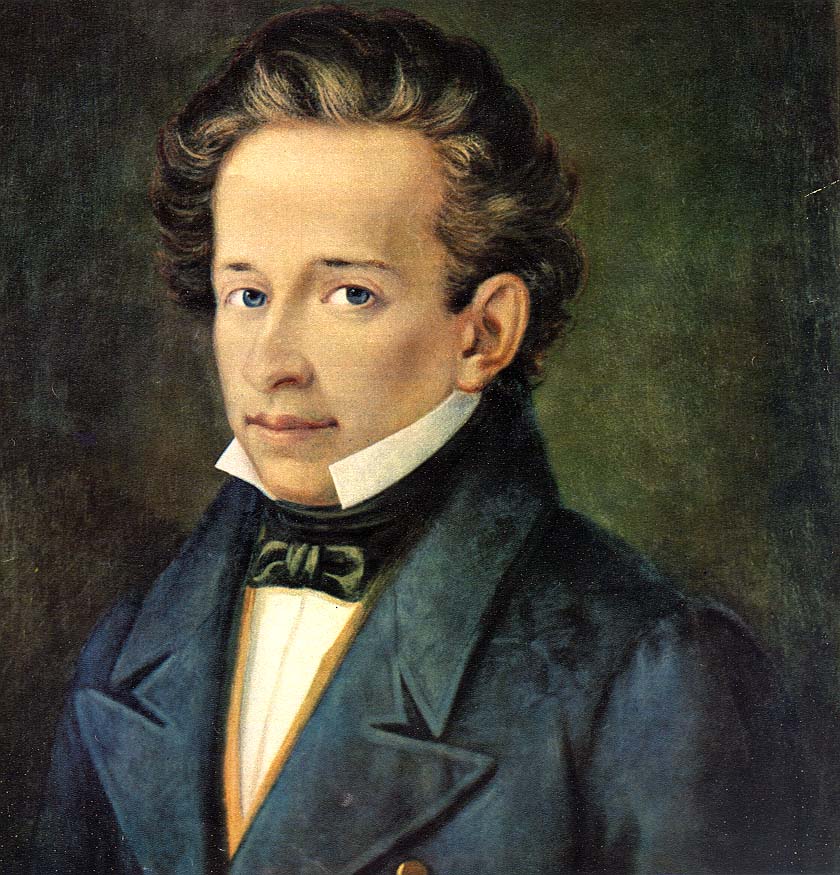
    Il conte Giacomo Leopardi in un dipinto di Stanislao Ferrazzi (c. 1820)

    Giacomo Leopardi è considerato uno dei più importanti poeti italiani.
    Nella sua famosa poesia L’infinito tratta il tema dell’immaginazione, che rappresenta anche la libertà. Ascolta L’infinito recitato da diversi attori. Quale versione preferisci?
    Tu hai molta immaginazione?
    Secondo te cos’è la libertà?

    Giacomo Leopardi is considered one of the most important Italian poets.
    In his famous poem “L’infinito” (The Infinite) he explores the theme of imagination, which also represents freedom.
    Listen to “L’infinito” interpreted by different actors. Which version do you prefer?
    Do you have a lot of imagination?
    In your opinion, what is freedom?

    To practice Italian, in this activity we invite you to listen and research…
    PRACTICE HERE: Italian/English Version

    Para practicar el idioma italiano, en esta actividad te invitamos a escuchar y investigar…
    PRACTICA AQUÍ: Versión Italiano/Española

    Picture source: Wikipedia.org


    [ad_2]

    Source link

  • Core Words: How to Say “Groin,” “Kneecap,” and More!

    Core Words: How to Say “Groin,” “Kneecap,” and More!

    [ad_1]

    Hi everybody, my name is Thomas. Welcome to the 2000 Core Dutch Words and Phrases video series! Each lesson will help you learn new words, practice, and review what you’ve learned. Ok! Let’s get started! First is… WORD 1 (NORMAL SPEED) middel (NORMAL SPEED) “waist” (NORMAL SPEED) middel (SLOW) middel (NORMAL SPEED) “waist” (NORMAL SPEED) je middel opmeten (NORMAL SPEED) “measure one’s waist” (SLOW) je middel opmeten WORD 2 (NORMAL SPEED) knieschijf (NORMAL SPEED) “kneecap” (NORMAL SPEED) knieschijf (SLOW) knieschijf (NORMAL SPEED) “kneecap” (NORMAL SPEED) De knieschijf beschermt het gewricht en de pezen van de knie. (NORMAL SPEED) “The kneecap protects the joint and tendons of the knee.” (SLOW) De knieschijf beschermt het gewricht en de pezen van de knie. WORD 3 (NORMAL SPEED) lies (NORMAL SPEED) “groin” (NORMAL SPEED) lies (SLOW) lies (NORMAL SPEED) “groin” (NORMAL SPEED) verrekte lies (NORMAL SPEED) “groin pull” (SLOW) verrekte lies WORD 4 (NORMAL SPEED) achillespees (NORMAL SPEED) “Achilles’ heel” (NORMAL SPEED) achillespees (SLOW) achillespees (NORMAL SPEED) “Achilles’ heel” (NORMAL SPEED) De achillespees is de pees die van de hiel naar de enkel loopt. (NORMAL SPEED) “The Achilles’ heel refers to the tendon going from the heel to the ankle.” (SLOW) De achillespees is de pees die van de hiel naar de enkel loopt. WORD 5 (NORMAL SPEED) onderarm (NORMAL SPEED) “forearm” (NORMAL SPEED) onderarm (SLOW) onderarm (NORMAL SPEED) “forearm” (NORMAL SPEED) Ik heb een hart getatoeëerd op mijn onderarm, net boven de pols. (NORMAL SPEED) “I have a heart tattooed on my forearm just above the wrist.” (SLOW) Ik heb een hart getatoeëerd op mijn onderarm, net boven de pols. WORD 6 (NORMAL SPEED) duim (NORMAL SPEED) “thumb” (NORMAL SPEED) duim (SLOW) duim (NORMAL SPEED) “thumb” (NORMAL SPEED) Zonder de duim zouden we niets kunnen vastgrijpen. (NORMAL SPEED) “Without the thumb we couldn’t grasp anything.” (SLOW) Zonder de duim zouden we niets kunnen vastgrijpen. WORD 7 (NORMAL SPEED) pink (NORMAL SPEED) “pinkie” (NORMAL SPEED) pink (SLOW) pink (NORMAL SPEED) “pinkie” (NORMAL SPEED) De pink is de kleinste vinger aan de mensenhand. (NORMAL SPEED) “The pinkie is the smallest finger on the human hand.” (SLOW) De pink is de kleinste vinger aan de mensenhand. WORD 8 (NORMAL SPEED) middenvinger (NORMAL SPEED) “middle finger” (NORMAL SPEED) middenvinger (SLOW) middenvinger (NORMAL SPEED) “middle finger” (NORMAL SPEED) De middenvinger is meestal de langste vinger aan de mensenhand. (NORMAL SPEED) “The middle finger is generally the longest finger on the human hand.” (SLOW) De middenvinger is meestal de langste vinger aan de mensenhand. WORD 9 (NORMAL SPEED) wijsvinger (NORMAL SPEED) “index finger” (NORMAL SPEED) wijsvinger (SLOW) wijsvinger (NORMAL SPEED) “index finger” (NORMAL SPEED) De wijsvinger wordt vaak de aanwijzer genoemd. (NORMAL SPEED) “The index finger is often called the pointer.” (SLOW) De wijsvinger wordt vaak de aanwijzer genoemd. WORD 10 (NORMAL SPEED) ringvinger (NORMAL SPEED) “ring finger” (NORMAL SPEED) ringvinger (SLOW) ringvinger (NORMAL SPEED) “ring finger” (NORMAL SPEED) De vrouw doet een diamanten ring om haar ringvinger. (NORMAL SPEED) “The woman is putting a diamond ring on her ring finger.” (SLOW) De vrouw doet een diamanten ring om haar ringvinger. PRACTICE/REVIEW Let’s review. Respond to the prompts by speaking aloud. First, you will hear a word or phrase in English. Respond in Dutch, then repeat after me, focusing on pronunciation. Ready? (Do you remember how to say “waist?” Review 1) (3) (2) (1) middel (1) middel (And how to say “kneecap?” Review 2) (3) (2) (1) knieschijf (1) knieschijf (What about “groin?” Review 3) (3) (2) (1) lies (1) lies (Do you remember how to say “Achilles’ heel?” Review 4) (3) (2) (1) achillespees (1) achillespees (Let’s try “forearm!” Review 5) (3) (2) (1) onderarm (1) onderarm (What about “thumb?” Review 6) (3) (2) (1) duim (1) duim (Now, let’s see if you remember how to say “pinkie!” Review 7) (3) (2) (1) pink (1) pink (Another one! What about “middle finger?” Review 8) (3) (2) (1) middenvinger (1) middenvinger (Do you remember how to say “index finger?” Review 9) (3) (2) (1) wijsvinger (1) wijsvinger (And finally, do you remember how to say “ring finger?” Review 10) (3) (2) (1) ringvinger (1) ringvinger Well done! See you next time! Tot ziens.


    [ad_2]

    Source link

  • Strangers: Che and Ya – RussianPod101

    Strangers: Che and Ya – RussianPod101

    [ad_1]

    Zdrastvuite, Ya Svetlana! Welcome to Russianpod101.com’s Алфавит Made Easy! The fastest, easiest, and most fun way to learn the Russian Cyrillic alphabet: the Алфавит! You’re officially on the second half! Last time we quickly reviewed all of our True Friends, False Friends, and New Friends. Then we learned a few new words and phrases. Now is where it gets really fun! In this lesson we’ll introduce our last category of Russian letters – “Strangers.” Strangers are letters which don’t look familiar and don’t have an equivalent letter in English. After that, we’ll learn some more phrases for your notebook. Ready to go? Our first Stranger is “Я”. It looks like a backwards Arr but unfortunately, it doesn’t sound similar at all. It’s almost always pronounced “Ya”, like “Why”-”A” in English. In addition to being a letter, on its own it is one of the most important words in Russian: the first personal pronoun, “I”. In printed form, size is the only difference between the upper and lowercase versions. Here’s the uppercase. Я (print, upper) And the lowercase. Я (print, lower) The cursive version of uppercase “Я” looks like this. With the loop, it may seem a bit confusing at first. But once you get used to it, you will realize that it is quite an efficient stroke. Lowercase “Я” is written the same way as the uppercase, except for the smaller size. It also has the hook on the left. This is the third letter we have learned that uses a hook when following another letter. Now let’s write them. Я (cursive, upper) And the lowercase. Я (cursive, lower) The second letter we’ll learn in this lesson looks like the number 4: Ч. While it may look strange, “Ч” has a pretty familiar sound. “Ч” usually makes a “ch” sound, but sometimes it can sound like “sh” when used before a hard sound or at the beginning of the word. We’ll go over this in more detail later. Size is the only difference between the upper and lowercase versions. Here’s how to write the printed versions. Ч (print, upper) And the lowercase. Ч (print, lower) Now let’s see how to write “Ч” by hand. Uppercase “Ч” is easy to write, and because it looks quite similar to the printed version, it’s easy to read too. It’s written with a single stroke and connects smoothly to the next letter. The lowercase is a bit more interesting. When it stands alone, it’s pretty easy to recognize, but when it’s connected to a preceding letter, it looks similar to a lowercase cursive Arr in English. When transitioning into “Ч”, you have to stretch the connection point from the previous letter so it connects more smoothly. Handwriting time. Ч (cursive, upper) And the lowercase. Ч (cursive, lower) Great! We’ve learned two new letters. Now let’s see some new sentences that you can write! First up is a question and answer that introduces a very important and useful phrase. Try reading it aloud. [short pause] Did you try to say “Chto”? It’s nearly impossible, isn’t it! That’s why the first word in this sentence is pronounced “Shto” with an “Ess”-”Aytch” sound. This is an incredibly useful word because it means “what.” We know “eto” means “this,” so basically you’re asking “What is this?” “Shto eto”. In the answer, we see “Eto” again, and “Fabrika” which we already know means “factory.” “Moya” means “My.” So the question and answer fully translated is: “What is this?” “This is my factory.” Что это? Это моя фабрика. (cursive) Don’t forget the hook on the lowercase “я”! Now you are ready to move on to another useful phrase. [short pause] We read this phrase as “Я еду через Москву.” Let’s go over the words in the phrase. As we just mentioned, “Я” means “I”. “еду” means “to go (by transport),” “через” means “through,” and “Москву” is a form of Moscow. So fully translated it reads “I am going through Moscow” with the implication that you are using transport, and not going by foot. Я еду через Москву. (cursive) In the next lesson, we’ll meet a few more Strangers. I hope you’re excited! See you in the next Алфавит Made Easy! lesson. Пока Пока


    [ad_2]

    Source link

  • Cars and Driving: Common Terms

    Cars and Driving: Common Terms

    [ad_1]

    Learn New Words FAST with this Lesson’s Vocab Review List

    Get this lesson’s key vocab, their translations and pronunciations. Sign up for your Free Lifetime Account Now and get 7 Days of Premium Access including this feature.


    [ad_2]

    Source link

  • Core Words: How to Say “Blonde Hair,” “Chin,” and More!

    Core Words: How to Say “Blonde Hair,” “Chin,” and More!

    [ad_1]

    Hi everybody, my name is Thomas. Welcome to the 2000 Core Dutch Words and Phrases video series! Each lesson will help you learn new words, practice, and review what you’ve learned. Ok! Let’s get started! First is… WORD 1 (NORMAL SPEED) puistjes krijgen (NORMAL SPEED) “break out” (NORMAL SPEED) puistjes krijgen (SLOW) puistjes krijgen (NORMAL SPEED) “break out” (NORMAL SPEED) puistjes op de huid krijgen (NORMAL SPEED) “skin breaking out” (SLOW) puistjes op de huid krijgen WORD 2 (NORMAL SPEED) kin (NORMAL SPEED) “chin” (NORMAL SPEED) kin (SLOW) kin (NORMAL SPEED) “chin” (NORMAL SPEED) kinhaar (NORMAL SPEED) “chin hair” (SLOW) kinhaar WORD 3 (NORMAL SPEED) voorhoofd (NORMAL SPEED) “forehead” (NORMAL SPEED) voorhoofd (SLOW) voorhoofd (NORMAL SPEED) “forehead” (NORMAL SPEED) Wanneer hij hoofdpijn heeft, wrijft hij over zijn voorhoofd. (NORMAL SPEED) “When he has a headache, he rubs his forehead.” (SLOW) Wanneer hij hoofdpijn heeft, wrijft hij over zijn voorhoofd. WORD 4 (NORMAL SPEED) blond haar (NORMAL SPEED) “blonde hair” (NORMAL SPEED) blond haar (SLOW) blond haar (NORMAL SPEED) “blonde hair” (NORMAL SPEED) De vrouw heeft blond haar. (NORMAL SPEED) “The woman has blonde hair.” (SLOW) De vrouw heeft blond haar. WORD 5 (NORMAL SPEED) zwart haar (NORMAL SPEED) “black hair” (NORMAL SPEED) zwart haar (SLOW) zwart haar (NORMAL SPEED) “black hair” (NORMAL SPEED) De vrouw heeft zwart haar. (NORMAL SPEED) “The woman has black hair.” (SLOW) De vrouw heeft zwart haar. WORD 6 (NORMAL SPEED) bruin haar (NORMAL SPEED) “brown hair” (NORMAL SPEED) bruin haar (SLOW) bruin haar (NORMAL SPEED) “brown hair” (NORMAL SPEED) Ze heeft bruin haar en kuiltjes in haar wangen. (NORMAL SPEED) “She has brown hair and dimples.” (SLOW) Ze heeft bruin haar en kuiltjes in haar wangen. WORD 7 (NORMAL SPEED) rood haar (NORMAL SPEED) “red hair” (NORMAL SPEED) rood haar (SLOW) rood haar (NORMAL SPEED) “red hair” (NORMAL SPEED) De vrouw heeft lang rood haar. (NORMAL SPEED) “The woman has long, red hair.” (SLOW) De vrouw heeft lang rood haar. WORD 8 (NORMAL SPEED) tand (NORMAL SPEED) “tooth” (NORMAL SPEED) tand (SLOW) tand (NORMAL SPEED) “tooth” (NORMAL SPEED) Het is belangrijk om naar de tandarts te gaan als je pijn in je tand hebt. (NORMAL SPEED) “When your tooth hurts, it is important to go to the dentist.” (SLOW) Het is belangrijk om naar de tandarts te gaan als je pijn in je tand hebt. WORD 9 (NORMAL SPEED) rimpel (NORMAL SPEED) “wrinkle” (NORMAL SPEED) rimpel (SLOW) rimpel (NORMAL SPEED) “wrinkle” (NORMAL SPEED) rimpels op het voorhoofd (NORMAL SPEED) “wrinkles on the forehead” (SLOW) rimpels op het voorhoofd WORD 10 (NORMAL SPEED) wenkbrauw (NORMAL SPEED) “eyebrow” (NORMAL SPEED) wenkbrauw (SLOW) wenkbrauw (NORMAL SPEED) “eyebrow” (NORMAL SPEED) Vrouwen plukken vaak de haren van hun wenkbrauwen. (NORMAL SPEED) “Women often pluck their eyebrow hairs.” (SLOW) Vrouwen plukken vaak de haren van hun wenkbrauwen. PRACTICE/REVIEW Let’s review. Respond to the prompts by speaking aloud. First, you will hear a word or phrase in English. Respond in Dutch, then repeat after me, focusing on pronunciation. Ready? (Do you remember how to say “break out?” Review 1) (3) (2) (1) puistjes krijgen (1) puistjes krijgen (And how to say “chin?” Review 2) (3) (2) (1) kin (1) kin (What about “forehead?” Review 3) (3) (2) (1) voorhoofd (1) voorhoofd (Do you remember how to say “blonde hair?” Review 4) (3) (2) (1) blond haar (1) blond haar (Let’s try “black hair!” Review 5) (3) (2) (1) zwart haar (1) zwart haar (What about “brown hair?” Review 6) (3) (2) (1) bruin haar (1) bruin haar (Now, let’s see if you remember how to say “red hair!” Review 7) (3) (2) (1) rood haar (1) rood haar (Another one! What about “tooth?” Review 8) (3) (2) (1) tand (1) tand (Do you remember how to say “wrinkle?” Review 9) (3) (2) (1) rimpel (1) rimpel (And finally, do you remember how to say “eyebrow?” Review 10) (3) (2) (1) wenkbrauw (1) wenkbrauw Well done! See you next time! Tot ziens.


    [ad_2]

    Source link

  • Core Words: How to Say “Pimple,” “Tall,” and More!

    [ad_1]

    Hi everybody, my name is Thomas. Welcome to the 2000 Core Dutch Words and Phrases video series! Each lesson will help you learn new words, practice, and review what you’ve learned. Ok! Let’s get started! First is… WORD 1 (NORMAL SPEED) lang (NORMAL SPEED) “tall” (NORMAL SPEED) lang (SLOW) lang (NORMAL SPEED) “tall” (NORMAL SPEED) De jongen is langer dan het meisje. (NORMAL SPEED) “The boy is taller than the girl.” (SLOW) De jongen is langer dan het meisje. WORD 2 (NORMAL SPEED) slank (NORMAL SPEED) “slim” (NORMAL SPEED) slank (SLOW) slank (NORMAL SPEED) “slim” (NORMAL SPEED) slank figuur (NORMAL SPEED) “slim figure” (SLOW) slank figuur WORD 3 (NORMAL SPEED) lichaamstype (NORMAL SPEED) “body type” (NORMAL SPEED) lichaamstype (SLOW) lichaamstype (NORMAL SPEED) “body type” (NORMAL SPEED) Hij heeft een heel rond lichaamstype. (NORMAL SPEED) “He has a very round body type.” (SLOW) Hij heeft een heel rond lichaamstype. WORD 4 (NORMAL SPEED) figuur (NORMAL SPEED) “figure” (NORMAL SPEED) figuur (SLOW) figuur (NORMAL SPEED) “figure” (NORMAL SPEED) mooi figuuur (NORMAL SPEED) “nice figure” (SLOW) mooi figuuur WORD 5 (NORMAL SPEED) dik (NORMAL SPEED) “thick” (NORMAL SPEED) dik (SLOW) dik (NORMAL SPEED) “thick” (NORMAL SPEED) Hij is lang en dik. (NORMAL SPEED) “He’s tall and thick.” (SLOW) Hij is lang en dik. WORD 6 (NORMAL SPEED) dun (NORMAL SPEED) “thin” (NORMAL SPEED) dun (SLOW) dun (NORMAL SPEED) “thin” (NORMAL SPEED) De vrouw is dun. (NORMAL SPEED) “The woman is thin.” (SLOW) De vrouw is dun. WORD 7 (NORMAL SPEED) speeksel (NORMAL SPEED) “saliva” (NORMAL SPEED) speeksel (SLOW) speeksel (NORMAL SPEED) “saliva” (NORMAL SPEED) Als ik eten zie dat ik lekker vind, vormt zich speeksel in mijn mond. (NORMAL SPEED) “When I see food I like, saliva builds in my mouth.” (SLOW) Als ik eten zie dat ik lekker vind, vormt zich speeksel in mijn mond. WORD 8 (NORMAL SPEED) huilen (NORMAL SPEED) “cry” (NORMAL SPEED) huilen (SLOW) huilen (NORMAL SPEED) “cry” (NORMAL SPEED) De baby is aan het huilen. (NORMAL SPEED) “The baby is crying.” (SLOW) De baby is aan het huilen. WORD 9 (NORMAL SPEED) traan (NORMAL SPEED) “tear” (NORMAL SPEED) traan (SLOW) traan (NORMAL SPEED) “tear” (NORMAL SPEED) Als je huilt, komen er tranen uit je ogen. (NORMAL SPEED) “When you cry tears fall from your eyes.” (SLOW) Als je huilt, komen er tranen uit je ogen. WORD 10 (NORMAL SPEED) puistje (NORMAL SPEED) “pimple” (NORMAL SPEED) puistje (SLOW) puistje (NORMAL SPEED) “pimple” (NORMAL SPEED) De man heeft een puistje op zijn neus. (NORMAL SPEED) “The man has a pimple on his nose.” (SLOW) De man heeft een puistje op zijn neus. PRACTICE/REVIEW Let’s review. Respond to the prompts by speaking aloud. First, you will hear a word or phrase in English. Respond in Dutch, then repeat after me, focusing on pronunciation. Ready? (Do you remember how to say “tall?” Review 1) (3) (2) (1) lang (1) lang (And how to say “slim?” Review 2) (3) (2) (1) slank (1) slank (What about “body type?” Review 3) (3) (2) (1) lichaamstype (1) lichaamstype (Do you remember how to say “figure?” Review 4) (3) (2) (1) figuur (1) figuur (Let’s try “thick!” Review 5) (3) (2) (1) dik (1) dik (What about “thin?” Review 6) (3) (2) (1) dun (1) dun (Now, let’s see if you remember how to say “saliva!” Review 7) (3) (2) (1) speeksel (1) speeksel (Another one! What about “cry?” Review 8) (3) (2) (1) huilen (1) huilen (Do you remember how to say “tear?” Review 9) (3) (2) (1) traan (1) traan (And finally, do you remember how to say “pimple?” Review 10) (3) (2) (1) puistje (1) puistje Well done! See you next time! Tot ziens.


    [ad_2]

    Source link