نویسنده: AliBina

  • 5 Russian Learning Hacks that You Didn’t Know About

    5 Russian Learning Hacks that You Didn’t Know About

    [ad_1]

    If you want to learn the language fast, there are some little-known learning hacks that you can use with our system. Five learning hacks that you didn’t know about. And in this quick guide, you’ll discover: 1. How to understand and pick up on every word with the read-along method 2. How to improve your speaking and pronunciation with one tool 3. How to immerse yourself in native dialogues and much more But first, if you don’t yet have access to our language learning system, sign up for a free lifetime account right now. Just click the link in the description to get your free lifetime account. Ever listen to a conversation between native speakers and wish you could follow along with a transcript? Well, you can. In fact, listening and reading along is a popular learning hack for mastering a language. You pick up on every word, you improve your listening skills, reading skills, and engage multiple senses at once, which improves recall, and you can do just that with our lessons. On every lesson page, you get the complete word-for-word transcript to read along with. Shadowing is another popular language learning trick, and it’s where you repeat what you hear as a way to improve your speaking skills. So as you’re taking our lessons, you can shadow the lesson conversation. And you can do this easily with the line by line audio dialogue, which breaks up the conversation into individual lines. Just press play on the audio to listen and then repeat. You can also use the pronunciation practice tool to compare yourself to native speakers. Just press the microphone icon, record yourself speaking the line, and then you can hear how your pronunciation compares to the native speaker. The dialogue tracks give you just the conversation of the lessons, no translations, so that you can review the conversations without retaking lessons. And if you’re learning with our app, you can just set the dialogue tracks on autoplay and immerse yourself in different types of dialogues, boost your listening skills, and drill all the conversations into your brain. Go into the settings on the app and in autoplay, make sure autoplay is on. Turn on dialogue, turn off the other tracks, also set play next lessons to on and the app will do the rest for you. Now if you’re not sure whether you’re getting the most out of the lesson or not, well if you follow our lesson checklists you’ll walk away knowing more of the language guaranteed. This premium PDF can be found inside the PDF download section of the lesson and gives you bonus tips to follow. Just print out the checklist and fill it out with every lesson. The word bank is kind of like your extended brain, where you can save words and phrases that you come across to the word bank. So you review them later. Just look for the word bank in the vocabulary menu on the site. But what’s cool is you can also create printable study sheets for your words and phrases as well. Just click on “Printer Friendly Version,” you can also click “Export Word Bank” if you’ve organized and labeled your words into categories such as verbs and adjectives, you can select that label and export it as a PDF, then print the file out. You can write on it and keep it as physical study material. So, if you want to learn the language and get access to these learning tools and our learning system, sign up for a free lifetime account right now. Just click the link in the description to get your free lifetime account.


    [ad_2]

    Source link

  • Elegant Italian Words to Elevate Your Vocabulary

    [ad_1]

    Exploring Fancy Italian Words

    My favorite part of learning a new language is discovering words that sound unique, elegant, or fun. For me, the Italian language blends phonetic beauty with expressive nuance, which is probably what makes it the most beautiful language, with its musicality and charm.

    Immersing yourself in the lexicon of a new language is not just about memorizing vocabulary, but it’s about experiencing the culture, history, and emotion that each word embodies.

    What I find most intriguing, are the less common, more sophisticated words. They undoubtably belong to the most beautiful Italian words, and are often borrowed from literature, history, or even other languages, showing the incredible depth of Italian as a living language.

    Many Italian words evolved over time, altering their meanings and reflecting cultural or historical contexts. To truly understand them, it is important to dive into the history of the Italian language and to look beyond their direct translations, so to grasp their cultural significance.

    Learning becomes truly enriching when you can appreciate a word not only for its meaning but for the story it tells. If you’re just starting out, focus on commonly used Italian words to build a solid foundation, or check on the Italian word of the day to expand your vocabulary.

    A Dive into the Unusual and Sophisticated

    Asciugamano

    Though asciugamano (towel) might sound like an ordinary word to native Italian speakers, it sounds quite fancy to non-natives. Its meaning isn’t, yet its four-syllable structure and flowing rhythm make it sound almost lyrical.

    Lapalissiano

    Ever since I learned the meaning of this word, I can’t stop using it. A friend of mine said it once, several years ago, and it just stuck in my mind. For me, this word elegantly rolls off the tongue.

    Lapalissiano means “obvious”, and it derived from the French phrase “vérité de La Palice”. It is often used humorously to point out a truth that is glaringly obvious.

    Precipitevolissimevolmente

    If you love tongue-twisters, precipitevolissimevolmente might just be your new favorite word. It is known as one of the longest words in the Italian language, but it simply means “in a very hasty manner”.

    Pappagallo and Coccodrillo

    The word pappagallo (parrot) is another example of an Italian word that sounds playful. Another word that has a similar phonological construction and falls into the category of words that are both fun to say and add a bit of charm to the language is coccodrillo (crocodile).

    I guess that double consonants just sound very cool to non-native speakers!

    Allora

    If you have spent some time learning Italian, I am sure you heard the word allora many times already. It is a conversational bridge, like “so” or “well” in English.

    Even if it is a simple filler word, it has a certain charm and is incredibly useful for non-native speakers who want to try to sound more natural.

    The Beauty of Learning Fancy Words

    What I find most intriguing about these words is how they reveal personal preferences for the beauty, rarity, or sophistication of the Italian language. All these words add a layer of cultural understanding and linguistic nuance.

    By exploring these unique words, you will expand our vocabulary and also gain a more profound appreciation for the rich tapestry that is the Italian language.

    If you want to enhance your Italian skills, immerse yourself in both common and sophisticated vocabulary to gain a deeper grasp of the language. And remember, the journey is as important as the destination: enjoy the process of discovering these linguistic gems!

    [ad_2]

    Source link

  • How to Say Good Morning in Portuguese

    How to Say Good Morning in Portuguese

    [ad_1]

    When learning a new language, greetings are among the first phrases you’ll master. Knowing how to say “good morning” is essential for starting the day on the right foot. In Portuguese, whether you’re in Brazil, Portugal, or another Lusophone country, knowing how to greet people properly can make a huge difference in your interactions. In this blog post, we’ll explore not only how to say “good morning” in Portuguese but also the cultural nuances that come with it.

    The direct translation of “good morning” in Portuguese is “bom dia”. Here’s a quick breakdown:

    So, “bom dia” literally means “good day,” but it’s used exclusively in the morning, typically until noon or just after.

    Pronunciation Tip:

    • “Bom” is pronounced like , with a nasal sound.
    • “Dia” is pronounced jee-ah, with a soft d that almost sounds like j.

    How to Say Good Morning in Portuguese2. When to Use “Bom Dia”

    In Portuguese-speaking cultures, “bom dia” is used to greet someone early in the day. You can use it in both formal and informal settings, whether you’re talking to a friend, a shopkeeper, or even a stranger in passing. Brazilians, in particular, are known for their friendliness and are likely to greet you with a cheerful “bom dia” whenever you meet in the morning.

    Using “bom dia” is polite and expected in most social interactions. Even in a professional setting, it’s common to greet your coworkers or clients with a “bom dia” when you arrive in the morning.

    3. Beyond “Bom Dia”: Other Morning Greetings

    If you’re feeling a bit more creative or want to expand your vocabulary, there are a few variations and alternatives to “bom dia” that you can use:

    • “Tenha um bom dia” – This means “Have a good day.” It’s a slightly more formal or complete version of “bom dia.”
    • “Bom dia, tudo bem?” – A friendly way to say “Good morning, how are you?” It’s common to add a little extra to your greeting, especially in Brazil, where people enjoy small talk.
    • “Um ótimo dia para você” – This translates to “A great day for you.” It’s a warm and friendly wish for someone to have a really good day.

    4. Cultural Context: Morning Greetings in Brazil

    In Brazil, greeting someone with “bom dia” goes beyond mere words; it’s an important part of daily social interactions. Brazilians are generally warm and hospitable, and starting the day with a smile and a “bom dia” is seen as a way to foster good relationships. Whether you’re grabbing coffee at a local café or entering an office building, saying “bom dia” sets a positive tone for the rest of your encounter.

    Unlike in some cultures where people may skip morning greetings altogether, Brazilians make a point of greeting everyone they meet, even in passing. So, if you’re living in or visiting Brazil, be ready to exchange a lot of “bom dias”!

    5. Morning Greetings in Portugal and Other Lusophone Countries

    While the phrase “bom dia” is universal across Portuguese-speaking countries, the way it’s used can vary slightly from country to country. In Portugal, for example, people tend to be a bit more reserved, but greeting someone with “bom dia” is still considered polite and appropriate. In Angola, Mozambique, and other Portuguese-speaking countries, the same rule applies—greetings are important, and starting the day with “bom dia” is essential.

    6. Conclusion: The Power of “Bom Dia”

    Mastering greetings like “bom dia” is a crucial step in your Portuguese learning journey. Not only does it help you communicate effectively, but it also allows you to connect with people on a more personal level. Whether you’re in Brazil, Portugal, or another Lusophone country, a friendly “bom dia” can go a long way in making a great first impression.

    So, the next time you find yourself in a Portuguese-speaking environment, don’t hesitate to start the day with a cheerful “bom dia!” It’s simple, yet powerful, and a key to embracing the warmth and friendliness of the Portuguese language.

    Caminhos Language Centre is the largest and most exciting Portuguese school in Rio de Janeiro, Brazil. We have an excellent infrastructure, over 15 experienced Brazilian teachers, and a friendly multilingual support staff. We are the only school in Brazil able to offer Portuguese group courses throughout the year on 10 different levels. Moreover, our school also offers more than just Portuguese lessons for foreigners, we offer you the complete Rio de Janeiro experience. Every day we organize 100% free and fun activities for you to socialize and practice your Portuguese. We can also help you with a student visa for Brazil and accommodation in Rio de Janeiro. Follow us on Instagram for some Portuguese tips and news.


    [ad_2]

    Source link

  • Saying Where You’re From – Part 1

    Saying Where You’re From – Part 1

    [ad_1]

    Hi everyone, I’m Thomas, hallo daar, ik ben Thomas. Welcome to the Dutch Whiteboard Lessons. In this lesson, you’ll learn to say where you’re from in Dutch. Let’s get started. Let’s look at the dialogue. When I read, I want you to pay attention to the structure. See how it’s used in the dialogue to express your origin. Waar kom je vandaan? Where are you from? Ik kom uit Assen. I’m from Assen. Now let’s look at the sentence pattern. This pattern will be the structure that all our examples will follow. Ik kom uit place. In English, I’m from place. Okay, let’s look at the vocabulary. This time it’s a short list because the expression is always the same. Ik, I. Next up, kom, come, kom, kom, kom. Uit, from, uit, uit, uit. And finally, vandaan, which also means from, vandaan, vandaan, vandaan. Now let’s look at some speaking examples. Ik kom uit Rotterdam. I’m from Rotterdam. Ik kom uit Rotterdam. Next up we have, ik kom uit Limburg. I’m from Limburg. Ik kom uit Limburg. Ik kom uit Nederland. I’m from the Netherlands. Ik kom uit Nederland. You will notice from the vocabulary that there are two Dutch words for from. One of them is uit and the other one is vandaan. What’s the difference? Well, in this case, vandaan is only used in combination with the word waar or where, meaning where from. In this case, where are you from? Waar kom je vandaan? Since vandaan is used in combination with waar, it follows then that it’s also used in combination with there, daar, and hier, hier. Waar vandaan? Daar vandaan. Hier vandaan. Hier vandaan.


    [ad_2]

    Source link

  • Giving Someone Your Phone Number – Part 1

    Giving Someone Your Phone Number – Part 1

    [ad_1]

    Hi everybody, I’m Seda Sürel. Herkese merhaba, ben Seda Sürel. Welcome to another Whiteboard lesson. In this lesson, you will learn how to say your phone number in Turkish. Let’s get started. Before getting started, I would like to give a disclaimer. When giving phone numbers in Turkish, we typically don’t say the digits separately, like 1, 2, 3, 4. We tend to use hundreds when providing phone numbers, like 554 for 265. But as it would be difficult for beginners, we’ll use single digit numbers for this lesson. Cell phones are typically used in daily Turkish life. For the most part, these numbers start with 0532, 0533, 0535 or 0542. For general phones at our homes, every city has its own area code. You need to learn the area code before calling that city. For example, Istanbul has two codes, 212 or 216. Turkey’s general code for calling from other countries is plus 90. Keeping that in mind, let’s get started. Okay, let’s look at the vocabulary. Bir, iki, üç, dört, beş, altı, yedi, sekis, dokus, sıfır. One more time. bir, iki, üç, dört, beş, altı, yedi, sekis, dokus, sıfır. One, two, three, four, five, six, seven, eight, nine, and zero. Bir, iki, üç, dört, beş, altı, yedi, sekis, dokus, sıfır. Now, let’s go over an example conversation. Imagine someone is registering their phone number in an office. Numaranız nedir?, Numaranız nedir?, Numaram sıfır, beş, üç, üç, yedi, sekis, dört, iki, bir, dokus, altı. One more time, a bit slower. Numaranız nedir?, what is your number? Numaram sıfır, beş, üç, üç, yedi, sekis, dört, iki, bir, dokus, altı. We stop after this, ok? My number is 0-5-3-3-7-8-4-2-1-9-6. Numaranız nedir?, Numaram sıfır, beş, üç, üç, yedi, sekis, dört, iki, bir, dokus, altı. Let’s take a closer look at this dialogue. First, we see the request. Numaranız nedir? Numara means number and nedir means what is. Then you say numaram, like my number, then you say the numbers. When giving your phone number in Turkish as a beginner, it’s okay to give each digit separately, like 0533. After each group of digits, include a short pause, like I did, in place of these hyphens, okay? Nine, sorry, dokuz, altı, pause, okay? That’s it. Normally, we would read these numbers in hundreds, hundreds, and this is like 21 and 96. But for now, just say them separately, it’s okay. If you pause, then the Turkish person understands what you are saying. Let’s look at other examples, okay? Numaram, my number is 0216 pause, 315 pause, 6 0 pause, 1 4 pause. My number is 0216, 315, 60, 14. Let’s look at the other example. Numaram, my number is 0542, 399, 4589. Okay, now let’s look at the sentence pattern. This pattern is the structure that our dialogue and examples have followed. Numaram, phone number, my number is phone number. You just need to say numaram, okay? Numara means number, and the M at the end is my, my number.


    [ad_2]

    Source link

  • Free Russian Gifts of the Month – April 2025

    Free Russian Gifts of the Month – April 2025

    [ad_1]

    Access your free language gifts right now before they expire. First, 30 plus words and phrases for April Fool’s Day. This PDF will teach you how to say, that’s not funny, I don’t get it, and much more just in time for April Fool’s Day. Second, being funny, PDF conversation cheat sheet. This next PDF teaches you a quick conversation about telling jokes in your target language. Third, talking about months. If you can’t say the months, this one minute lesson will teach you how to say them all in your target language. Fourth, 15 flattering lines to impress native speakers. If you want to speak with natives, you’ll want to know these phrases. And fifth, want an app that gets you speaking from day one? The Innovative Language Learning app gives you bite-sized conversation lessons, where you listen to conversations between real native speakers and then get everything explained so you can speak and understand fast. Download it for free on Android, iPhone, and iPad. To get your free gifts of the month, click the link in the description below and download them now before they expire.


    [ad_2]

    Source link

  • Skipping School in Italian Slang: How Natives Say That

    [ad_1]

    “Skipping School” in Italian

    Regional Flavors

    Learning Italian is not just about memorizing words and grammar: it’s also about understanding the cultural nuances, the Italian dialects, and regional differences that shape the language.

    One interesting example is how Italians express the concept of “skipping school”. While in English this expression is quite consistent, in Italian there are multiple ways to say it, depending on the region or area.

    The Standard Expression: “Marinare la scuola”

    The most commonly recognized phrase for “skipping school” across Italy is marinare la scuola. This expression is very versatile, meaning you can use it in various settings, from casual conversations to written language.

    However, some native speakers, including myself, find marinare la scuola somewhat old-fashioned. This is probably why each region, and sometimes even each area within each region, have different way to express this concept.

    A Dive into Regional Expressions

    As I mentioned, there are different regional alternatives to express the traditional concept of marinare la scuola. Here, I will list some of these examples, based on my personal experience and that of close friends or colleagues.

    Notice that, although I will translate some of the words belonging to these expressions, their literal translation does not really play a role for the meaning of these idiomatic expressions.

    • Napoli: fare filone
      The word filone literally means a “long loaf of bread”, but here, of course, it is used with a different meaning.
    • Roma: andare a sega
      While sega literally means “saw”, it is often used with a quite vulgar meaning.
    • Toscana: fare forca
      Forca means “pitchfork”.
    • Veneto: bruciare
      The verb bruciare literally means “to burn”. This expression conveys a rebellious tone.
    • Emilia Romagna: fare fuga
      The word fuga means “escape”. Sometimes, you can also find the expression fare buco, which translates to “make a hole”, where the “hole” metaphorically represents a gap in one’s school attendance.
    • Lombardia: balzare scuola
      The verb balzare is the dialectal counterpart of saltare (to jump). This is a more modern expression, but a couple of decades ago people used to say bigiare, with the same meaning of today’s balzare.
    • Piemonte: tagliare
      The verb tagliare means “to cut”.

    Synonyms and Slang

    Italian is a language full of synonyms and slang, and “skipping school” is no exception. Depending on where you are in Italy—or even which generation you’re speaking to—you might hear a wide range of terms.

    For instance: bucare, schissare, fare forca, scavallare, far cavalletta, brasare, cabottare, salare, and many more. Do you want to know something fun? I do not know these terms at all!

    These variations provide valuable insights into Italy’s cultural diversity. For example, some terms may indicate a more urban slang from younger generations, while others might be deeply rooted in a specific regional dialect.

    [ad_2]

    Source link

  • My Journey Learning English

    My Journey Learning English

    [ad_1]

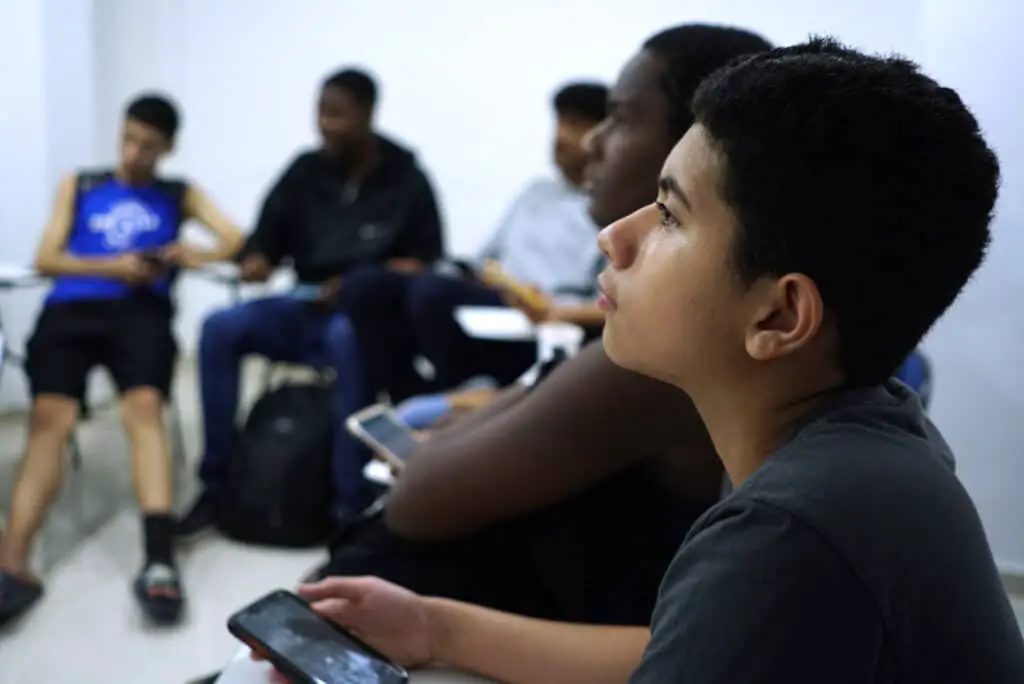
    I started learning English at Mais Caminhos in 2017. In the first class, I felt very shy because I thought the other students were better than me. But my teacher encouraged me to keep going and never give up. As time passed, I became more confident, and I finally started understanding what my teachers were saying! I was learning English because my mother always told me that learning new things would be good for my future. She was right; now I can see that my future will be brighter with the ability to read and write in English.

    Víctor Mendes Mais Caminhos

    My Journey Learning English

    Practicing dialogue has always helped me improve my English, and it’s fun because we talk about everyday things—our routines, our likes and dislikes, movies, songs, series, art, and more. At first, I found some accents, like British English, hard to understand, but I overcame this challenge thanks to the diverse volunteers at Mais Caminhos, who come from all over the world. Through them, I got to know different cultures and accents. Their support, along with my mother’s encouragement, helped me a lot.

    In the beginning, I was very shy, but now I am much more fearless. Meeting new people from different countries and cultures at Caminhos Language Centre has really boosted my confidence. I practice English all the time—listening to music, reading texts, watching movies, and helping tourists. One day, a girl from France and her family were looking for a bank, and I helped them. Now, Elisa, the girl, is my friend! We talk online, and I miss her a lot. Helping other tourists has made me feel like I’m doing something good!

    Learning English feels like having a superpower because I can make new friends and talk to everyone! I haven’t had a job yet, but I know this skill will make me stand out. English is a universal language, and I’m so grateful I can speak it! In recent years, I’ve achieved something very special—new friendships. Now that I know more about different cultures, I can connect with people from all over the world.

    I’m sure my future will be bright. I hope to do an exchange program in Europe one day because I love their culture. My big goal is to live in Canada when I’m an adult because it’s so multicultural, and it snows! I also dream of becoming a doctor and helping Mais Caminhos grow even more, making my community better. None of this would be possible if I hadn’t met Mais Caminhos, and I’m so grateful this NGO exists!

    For anyone just starting to learn English at Mais Caminhos, my advice is: never give up! It might be hard sometimes, but learning English will make your future better than your present, and you’ll have so much fun along the way. It will help you a lot in both your personal and professional life!

    Mais Caminhos Student, Victor Mendes, 14 years Old.

    [ad_2]

    Source link

  • Core Words Lesson #44 — Quiz Review

    Core Words Lesson #44 — Quiz Review

    [ad_1]

    Unlock In-Depth Explanations & Exclusive Takeaways with Printable Lesson Notes

    Unlock Lesson Notes and Transcripts for every single lesson. Sign Up for a Free Lifetime Account and Get 7 Days of Premium Access.


    [ad_2]

    Source link

  • Your Chance to Be the Life of the Russian Party

    Your Chance to Be the Life of the Russian Party

    [ad_1]

    INTRODUCTION Oxana: [Здравствуйте, с вами Оксана.] Eddie: Eddie here. Gengo Russian Season 1, Lesson 15. Your chance to be the life of the Russian party. Ok, speaking of which John is getting his first taste of business in Russia. Oxana: Well, he did have some business meetings in the last lesson. Eddie: True but come on, Axanna. Everybody knows that no business gets done without a table of food and some drunkenness. Oxana: That’s what you mean by “taste”. Got it. Eddie:But first let’s go over the day’s events of the last lesson. First off, I know he did a lot of things together with different businessmen and colleagues. Oxana: Yes, and to say that you did something with someone in Russian we use the word [с] and the phrase patterns as follows. Eddie:So remember, John met with three people. Oxana: [С представителем.] Eddie:With the representative. Oxana: [С менеджером.] Eddie: With the manager. Oxana: [С владельцем] Eddie: “With the owner.” He had so many things to do that we learned the expression for “a busy day” which was… Oxana: [Напряженный день.] Eddie: Well, after a day like that I think some relaxation is in order. Break out the vodka, Axanna. Oxana: Yes, that’s exactly what we need. Let’s listen in and find out whether John finds it as appealing as we do. Eddie: Let’s listen to the conversation. DIALOGUE Игорь Иванович: [Наконец-то можно расслабиться. Разрешите представить, это мой друг и партнёр по бизнесу Джон.] Igor Ivanovich: Nakonets-to mozhno rasslabit’sya. Razreshite predstavit’. eto moi drug i partnyor po biznesu John. Джон: [Добрый вечер, я Джон.] John: Dobryi vecher, ya John. Виктор: [О, здравствуйте Джон. Садитесь здесь. Вам нравится русская кухня? ] Victor: O, zdravstvuite John. Sadites’ zdes’. Vam nravitsya russkaya kuhnya? Джон:[Да, очень. Особенно борщ и блины.] John: Da, ochen’. Osobenno borshch i bliny. Виктор: [А как вам русская водка? ] Victor: A kak vam russkaya vodka? Джон: [Ну…] John: Nu… Виктор: [Давайте закажем. Девушка, пожалуйста, борщ, блины и 100 грамм водки. А мне…] Victor:Davaite zakazhem. Devushka, pozhaluista, borshch, bliny i sto gramm vodki. A mne… Eddie: Once again, more slowly. Игорь Иванович: [Наконец-то можно расслабиться. Разрешите представить, это мой друг и партнёр по бизнесу Джон.] Igor Ivanovich: Nakonets-to mozhno rasslabit’sya. Razreshite predstavit’. eto moi drug i partnyor po biznesu John. Джон: [Добрый вечер, я Джон.] John: Dobryi vecher, ya John. Виктор: [О, здравствуйте Джон. Садитесь здесь. Вам нравится русская кухня? ] Victor: O, zdravstvuite John. Sadites’ zdes’. Vam nravitsya russkaya kuhnya? Джон:[Да, очень. Особенно борщ и блины.] John: Da, ochen’. Osobenno borshch i bliny. Виктор: [А как вам русская водка? ] Victor: A kak vam russkaya vodka? Джон: [Ну…] John: Nu… Виктор: [Давайте закажем. Девушка, пожалуйста, борщ, блины и 100 грамм водки. А мне…] Victor:Davaite zakazhem. Devushka, pozhaluista, borshch, bliny i sto gramm vodki. A mne… Eddie: Once again, with the translation. Oxana: Ещё раз с переводом. Oxana: [Наконец-то можно расслабиться. Разрешите представить, это мой друг и партнёр по бизнесу Джон.] Eddie:Finally, we can relax. Let me introduce John, my friend and business partner. Oxana: [Добрый вечер, я Джон.] Eddie: Good evening. I’m John. Oxana: [О, здравствуйте Джон.] Eddie: Oh, hello, John. Oxana: [Садитесь здесь. Вам нравится русская кухня?] Eddie: Sit down here. Do you like Russian food? Oxana: [Да, очень. Особенно борщ и блины.] Eddie: Yes, very much. Especially borshch and bliny. Oxana: [А как вам русская водка? ] Eddie: And what do you think of Russian vodka? Oxana: [Ну…] Eddie: Well… Oxana: [Давайте закажем. Девушка, пожалуйста, борщ, блины и 100 грамм водки. А мне…] Eddie:Let’s order. Waiter, borshch, bliny and 100 milliliters of vodka, please. And for me… POST CONVERSATION BANTER Eddie: Drinking in Russia is not only an integral part of parties, but it’s also something you rarely can avoid in the company of two or more people. Russians are convinced that every foreigner must try their national product of pride – vodka. But they’re also convinced that a rare foreigner can handle it well. What actually amuses them is watching people struggling with their glasses of vodka and winching after every shot. Therefore you can either break the stereotype and show your strength or you can entertain Russians with your weakness of getting drunk quickly. The option of just saying “no” also works. No one will pressure you to drink if you don’t want to. VOCAB LIST Eddie: And let’s take a look at the vocabulary for this lesson. Oxana: [Наконец] Eddie:Finally. Oxana: [Наконец] Eddie:Next. Oxana: [Можно] Eddie: Can, may, allow to, possible. Oxana: [Можно] Eddie: Next one. Oxana: [Расслабиться] Eddie: To relax. Oxana: [Расслабиться] Eddie: Next one. Oxana: [Разрешите представить] Eddie: Let me introduce… Oxana: [Разрешите представить] Eddie: Next. Oxana: [Друг] Eddie: Friend. Oxana: [Друг] Eddie: Next. Oxana: [Партнёр по бизнесу] Eddie:Business partner. Oxana: [Партнёр по бизнесу] Eddie: Next. Oxana: [Добрый вечер] Eddie: Good evening. Oxana: [Добрый вечер] Eddie: Next. Oxana: [Садитесь] Eddie:“Sit down” – polite command form. Oxana: [Садитесь] Eddie: And next. Oxana: [Здесь] Eddie:Here. Oxana: [Здесь] Eddie:Next. Oxana: [Нравится] Eddie:To like. Oxana: [Нравится] Eddie:Next. Oxana: [Кухня] Eddie:Cuisine, food, kitchen. Oxana: [Кухня] Eddie:Next. Oxana: [Очень] Eddie: Very. Oxana: [Очень] Eddie: Next one. Oxana: [Особенно] Eddie:Especially. Oxana: [Особенно] Eddie: Next. Oxana: [Борщ] Eddie: [Borshch] Oxana: [Борщ] Eddie: And next. Oxana: [Блины] Eddie:Pancakes. Oxana: [Блины] Eddie:Next. Oxana: [Как вам] Eddie:How do you find, what do you think of. Oxana: [Как вам] M1: Next. Oxana: [Давайте] M1: Let’s. Oxana: [Давайте] Eddie: And next. Oxana: [Заказать] Eddie: To order, to book, to reserve. Oxana: [Заказать] Eddie: Next. Oxana: [Девушка] Eddie: “Girl” or, in a restaurant, “waitress”. Oxana: [Девушка] VOCAB AND PHRASE USAGE Eddie:Now that’s a menu to be salivated over, huh? Oxana: I know, I miss that kind of food. Eddie:But it’s not so difficult to make at home, right? Oxana: Yeah. And moreover most of the Russians think that if you really want to try an authentic Russian food don’t go to a restaurant. Homemade food is considered to be the best. [борщ], for example, is supposed to be cooked for six hours according to some recipes and what restaurant would ever bother to do that? Eddie: [Блины] is also something that has thousands of different recipes, right? The restaurants don’t use the most sophisticated ones, I guess. Oxana: Well, it’s just better to go to the places that are famous for certain dishes. Some of them are really good, but any Russian middle-aged housewife would insist that her cooking is the best. So if you have a chance to take part in Russian home party, agree immediately. It’s not going to be just Cola and chips, trust me. M1: Ok, now let’s take a look at the vocabulary. Oxana: [Наконец-то] Eddie:“Yes, finally”. Actually the ending [то] makes this word sound very colloquial. In the written language you’ll find [наконец] most of the time. Oxana: Yes, [наконец-то] sounds very conversational but it’s not impolite in any way so don’t worry about using it inappropriately. Eddie: The next word we heard is… Oxana: [можно] Eddie: Which can be translated with all English words that indicate something is being allowed such as “can”, “may”, “it’s ok”, “allowed to”, “it’s possible” and so on. Oxana: The word doesn’t require any pronouns. It doesn’t refer to anyone in particular, but just generally shows that something is allowed. For example, [Можно курить]. Eddie: It’s allowed to smoke. Oxana: [Можно расслабиться] Eddie: We can relax. It’s ok to relax. Oxana: [Можно купить.] Eddie: “It’s possible to buy.” And the next phrase will allow you to seem well-mannered and educated when meeting someone new. Oxana: [Разрешите представить.] Eddie:Which literally means “let me introduce”, then you just say the name of the person you’re introducing. Oxana: [Разрешите представить, это Эдди.] Eddie: Thanks, Axanna. And if I want to introduce myself what should I say? Oxana: [Разрешите представиться] Just add [ся] in the end. Eddie: Let me try. [Разрешите представиться, я Эдди] Oxana: Ok, enough of you, Eddie. Although let me use you one more time in our next phrase. [партнёр по бизнесу] Remember the particle [по]? As long as you remember the structure, you can use any nouns with the word [партнёр] which means “partner”. For example, Eddie is my recording partner so in Russian I can call him [партнёр по записи]. Eddie: How about [партнёр по теннису]? Oxana: Sounds great. Sometimes “partners” also mean boyfriends, girlfriends, husbands and wives and are called [партнёр по жизни] meaning “life partner”. It sounds rather formal though. Eddie: Ok. After John has been introduced, he greets the people in the restaurant, probably friends and family of Игорь Иванович, who wants to show off his foreign partner. What does John say? Oxana: [Добрый вечер] Where [добрый] is “kind” and [вечер] is “evening”. And altogether they stand for the phrase “good evening”. [Добрый вечер] Eddie: And the crowd greets him back. Oxana: [Здравствуйте, Виктор] Our well-known hello for all possible cases. Eddie:There’s this guy, let’s call him Victor, who has a place next to him, and he’s excited for John to take that place. Oxana: [Садитесь здесь] Eddie: The word [садитесь] should be familiar to you from the second lesson where Ileana invited John to sit down. And [здесь] means “here”. Oxana: But don’t confuse it with another “here” that we’ve learned before, [вот]. [Вот] only indicated “here” when you’re pointing at something or giving something to a person, more in the meaning of “here you are” or “here it is”. And [здесь] is the word to indicate a place, the literal “here”. Eddie: So Victor has John next to him and the ice-breaker in the restaurant is asking about food, obviously. Oxana: [Вам нравится русская кухня?] Eddie: Where [вам] means “to you” and [нравится] means “like”. But literally the phrase translates as “is something to your liking?” Oxanna, how do we use the phrase [нравится] with other pronouns when we want to ask whether he likes or they like something? Oxana: Ok, here’s the list of examples. [Мне нравится] Eddie: I like. Oxana: [Тебе нравится] Eddie: You like. Oxana: [Вам нравирся] Eddie: “You like” – plural or polite form. Oxana: [Нам нравится.] Eddie: We like. Oxana: [Ей нравится.] Eddie:She likes. Oxana: [Ему нравится.] Eddie: He likes. Oxana: [Им нравится.] Eddie:“They like.” Oxanna just read them all as statements. To make questions out of these phrases simply raise your intonation at the end. Oxana: Then we have a phrase [русская кухня] which literally means “Russian kitchen” but it implies food, of course. Russian food or Russian cuisine. Eddie: And John was obviously ready for this question. He answers… Oxana: [Да, очень.] Eddie:Yes, very much. Oxana: [Особенно борщ и блины.] Eddie: Especially [борщ] and [блины], which are pancakes. This is a very common answer which basically means he hasn’t tried anything else of Russian food, otherwise he’d named something fancier and really special. [борщ] and [блины] have always been the dishes everyone could afford, therefore they’re the most popular, but they’re definitely not the most outstanding representatives of Russian cuisine. Oxana: Moreover, [борщ] is originally a Ukrainian soup cooked with beet root and therefore has its particular red color. It also has a much richer taste than Russian [борщ]. The Russian version of it is called [щи] and the main ingredient there is cabbage. It has a very light, green color and light veggie taste. Eddie: Well, no matter how simple these dishes are, they will be offered to you in Russia as a must to try. It’s still delicious, especially [блины] with red or black caviar. Oxana: Right. You will also be offered, if not forced, to try Russian vodka. Eddie: But first Victor is asking John’s opinion about this fire drink. Oxana: Not that the answer really matters to Victor, but there it is. [А как вам русская водка?] Eddie: It’s a very useful and very simple phrase. [как вам] Literally it means “how to you”, but it can be translated into English as “what do you think about” or “how do you find”. You can replace [вам], “to you”, with the less formal word [тебе]. Then you just add whatever you want an opinion about. Give us some more examples, Axanna. Oxana: Eddie, [как тебе Москву]? Eddie: [Ну…] Oxana: Eddie’s long [ну] or “well” means he’s looking for words to tell me that he’d seen better but is afraid to offend me. The same is true with John and vodka. He’s obviously not excited about the prospect of getting drunk in unknown Russian company or he just doesn’t find this drink as terrific as Russians do, but he can’t say no directly to Victor’s excited face. Eddie:But either Victor is not a very perceptive man or the answer didn’t really matter to him as he shouts out… Oxana: [Давайте закажем.] Eddie: Which is “Let’s order!” Then he’s calling for a waitress. Oxana: [Девушка] Oxana: Which literally means “a girl”. And if you say [моя девушка] it will even mean “my girlfriend”, but it’s also a way to call for a waitress in a restaurant. It’s definitely more polite than the literal word for “waitress” in Russian. They are girls after all. And what of it’s a waiter? Oxana: Then you should refer to him as “a young man”, which in Russian is [Молодой человек]. Eddie: Victor starts his order with the word “please”. Oxana: [Пожалуйста] Eddie: The same “please” as the English one at the end of a request. But as we know, Russian word order is pretty flexible so you can choose whether to put it at the beginning or at the end of your request. So what did Victor order for John? Oxana: [Борщ, блины и 100 грамм водки.] Eddie: Which is [борщ], pancakes and 100 milliliters of vodka. Liquids in Russia are measure in liters and milliliters, but when it comes to vodka it’s grams. Before, Russians didn’t even say “to drink vodka” but “to eat vodka”. This is how special it’s always been. And then Victor orders for himself… Oxana: [А мне…] Eddie: Which literally means “and to me” or “and for me” and then who knows what he orders. It will be his little secret.

    Lesson focus

    Eddie: Now let’s take a look at the grammar. The focus is on the verb [давайте] or “let’s”. Oxana: You can also make it sound less formal by dropping the end [те], leaving [давай]. So [давай] and then… Eddie: And then the difficult part – the verb in the future tense used in the form of the first person in the plural, which is “we”, like in the sentences “We will read” or “We will watch”. Literally, your phrases with “let’s” will sound like “let’s we will read” or “let’s we will watch”. Here are some examples. Oxana: [Давай почитаем] Eddie: Let’s read. Oxana: [Давай посмотрим] Eddie: Let’s watch. Oxana: [Давай спросим] Eddie: “Let’s ask.” This will be difficult at first and, while it is, you can use a simple form of a suggestion. You can just say [давай] and then a verb in the dictionary form like [давай читать] and [давай смотреть]. Oxana: People will understand you perfectly well.

    Outro

    Eddie: That just about does it for today. [До свидания!] Oxana: [До новых встреч. Пока!] Eddie: [Пока!] Игорь Иванович: [Наконец-то можно расслабиться. Разрешите представить, это мой друг и партнёр по бизнесу Джон.] Igor Ivanovich: Nakonets-to mozhno rasslabit’sya. Razreshite predstavit’. eto moi drug i partnyor po biznesu John. Джон: [Добрый вечер, я Джон.] John: Dobryi vecher, ya John. Виктор: [О, здравствуйте Джон. Садитесь здесь. Вам нравится русская кухня? ] Victor: O, zdravstvuite John. Sadites’ zdes’. Vam nravitsya russkaya kuhnya? Джон:[Да, очень. Особенно борщ и блины.] John: Da, ochen’. Osobenno borshch i bliny. Виктор: [А как вам русская водка? ] Victor: A kak vam russkaya vodka? Джон: [Ну…] John: Nu… Виктор: [Давайте закажем. Девушка, пожалуйста, борщ, блины и 100 грамм водки. А мне…] Victor:Davaite zakazhem. Devushka, pozhaluista, borshch, bliny i sto gramm vodki. A mne…


    [ad_2]

    Source link