[ad_1]
[ad_2]
Source link
[ad_1]
[ad_2]
Source link

[ad_1]
learn how to ask someone’s opinion with this video conversation
[ad_2]
Source link
[ad_1]
In both English and Italian, indefinite expressions allow to convey a sense of uncertainty. However, the way each language handles this vagueness is different.
An example of these expressions are indefinite pronouns like qualcuno (someone), nessuno (no one), qualcosa (something), niente (nothing).
The easiest way you can convey a sense of vagueness in English is by means of the indefinite adjective “some“, which corresponds to the Italian qualche.
However, while English makes use of this word in a very flexible way, Italian requires a more context-specific approach to vagueness. This means that qualche doesn’t always map directly onto the English “some”.
Here, I will guide you through different ways you can translate all those expressions that are composed of “some” and another term, be it a noun or a pronoun, as in “somewhere”, “somewhat”, or “sometime”…
As I mentioned before, some in Italian is translated as qualche. In English, “some” can be applied almost universally to indicate an indefinite quantity or quality.
The Italian equivalent qualche, instead, has a limited use case and doesn’t cover all the indefinite meanings that “some” can convey in English.
In most of the cases, it requires the use of a preposition to fulfil the meaning it aims at conveying. For instance, have a look at the sentence below:
Simona è uscita per andare da qualche parte.
Simona left to go somewhere.
By examining how “some” is combined with other words, like “where”, “how”, and “time”, we can explore how these expressions translate into Italian and how the concept of vagueness is managed in the language.
Let’s break down how “some” functions with different expressions in English and how qualche or other Italian expressions translate these meanings.
In English, the word “somewhere” implies an unspecified location. Italian translates this as da qualche parte. While the concept is similar, Italian often requires a bit more mental effort in terms of context.
As you can see, it makes use of the indefinite adjective qualche, but it also requires the preposition di and the noun parte.
Ho lasciato il libro da qualche parte.
I left the book somewhere.
In English, “somewhat” is used to describe degree, such as a slight amount or intensity. To express this concept, Italian uses un po’.
Sono un po’ stanco oggi.
I’m somewhat tired today.
The word “somehow” in English specifically refers to an unspecified or unclear manner of accomplishing something. Italian makes use of the expression in qualche modo to convey this meaning, as in the following example:
In qualche modo, riusciremo a farlo.
Somehow, we’ll manage to do it.
As you might have noticed, this is structurally very similar to the Italian counterpart of “somewhere”, as it is composed of a preposition, qualche, and another word that is semantically linked to the purpose of the expression.
“Sometime” in English carries the dual meaning of an unspecified time in the future or occasional instances. Italian has two different translations for that.
When referring to an indefinite time in the future, you can use prima o poi. This expression translates literally to “sooner or later”, but it captures the essence of a vague point in time. For example:
Prima o poi andrò in Italia.
I’ll go to Italy sometime.
For occasional instances, again we use qualche, specifically the expression qualche volta, which translates to “sometimes” or “occasionally”, as in:
Qualche volta vado al cinema.
I go to the cinema sometimes.
The concepts of “someone” and “something” in Italian are captured by the indefinite pronouns qualcuno and qualcosa. Unlike all the other expressions we saw so far, here Italian has unique and direct terms to express these meanings.
Qualcuno is used to refer to an unspecified person, encompassing both the English words “someone” and “somebody. Qualcosa expresses the idea of an indefinite object, event, or matter, just like “something” in English.
Qualcuno ha bussato alla porta.
Someone knocked at the door.
Ho bisogno di qualcosa per il mal di gola.
I need something for my sore throat.
From a linguistic perspective, the Italian language leans towards specificity, even in situations where vagueness is involved. As you learned, qualche is one of those words that shows how Italian handles indefiniteness based on the context.
While in English we have unique words that make use of the combination of “some” with other terms, Italian cannot always directly translate those.
For me, as a language learner and instructor, this clarity within vagueness is one of the most fascinating aspects of Italian. The language doesn’t allow you to drift too far into ambiguity.
Instead, it asks you to anchor your expressions, providing just enough clarity to guide the listener without giving away all the details.
Understanding how to use these expressions, especially “qualche,” is key to mastering the subtleties of the Italian language. It’s this balance of clarity within vagueness that makes Italian both challenging and rewarding to learn.
[ad_2]
Source link

[ad_1]
Looking to Learn Portuguese Online in a way that feels real and interactive? Great news! Caminhos now offers Online Group Courses! In this article, you’ll learn how our new course formats bring the energy of Brazil to your screen through engaging, social, and effective language learning experiences.

Perhaps you have a Brazilian family and want to feel closer to your culture. Maybe you’re planning your first visit to Brazil and want to speak with confidence. Or perhaps you’ve lived in Brazil before and want to keep the language (and memories) alive. Whatever your reason, we are here to bring Brazil to your home.
It’s been proven that social interaction is essential when learning a new language. Talking to locals and experiencing their emotions and social behaviors helps you understand and immerse yourself in Brazilian culture. At Caminhos, we take a unique approach, which is why we have created a variety of online courses. Our main goal is to make the online learning experience feel like a real classroom.


Many online students have expressed their desire to learn Brazilian Portuguese for various reasons. Some have a Brazilian parent or grandparent who wants to connect more closely with them. Others come from families where Portuguese is spoken, and they don’t want to feel left out of conversations.
Additionally, some students have planned trips to Brazil, during which they will visit multiple places. They know they won’t have time to study Portuguese while traveling, so they take classes beforehand to learn at least the basics. We even have testimonials from students who simply enjoy the language and want to learn it for that reason.
Extra reading: How to Learn Portuguese Faster: AI vs. Locals

 Our Online Group Courses utilize the same teaching methods and learning programs as our in-person classes at Caminhos. The same instructors who teach in our physical classrooms are also present in our online courses. You will participate in games, listen to music, and practice your Brazilian Portuguese, all from one interactive platform.
Read more: Caminhos Methodology
This setup encourages students to interact with one another, exchange knowledge and experiences, and meet people from all around the world. We’re here to help you learn in a way that feels real, human, and alive, no matter where you are.
That’s why Caminhos now offers a variety of Online Group Courses, designed to fit your goals, lifestyle, and learning style. Whether you’re just getting started or looking to polish your conversation skills, we’ve got something for you:
Structured, Interactive, and Fun
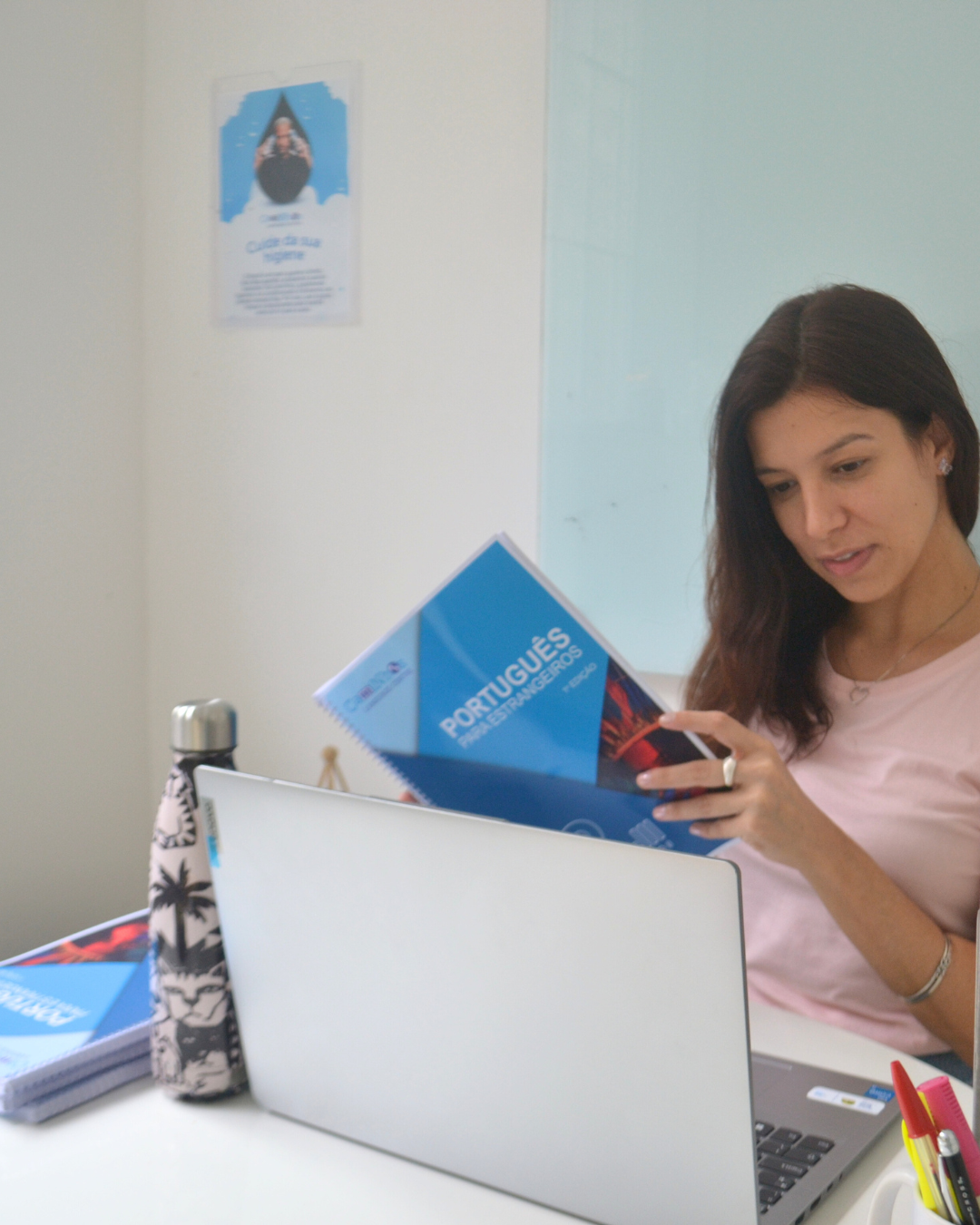
Our 5-week Online Group Course follows the same method and curriculum as our popular in-person intensive program in Rio de Janeiro. You’ll Learn Portuguese Online plus: have access to learning materials, receive a certificate upon completion, and enjoy live interaction with native teachers and classmates from around the world.
Tuesdays and Thursdays, 3:30–5:30 PM (BRT)
Materials and certificate included
Speak More, Fear Less
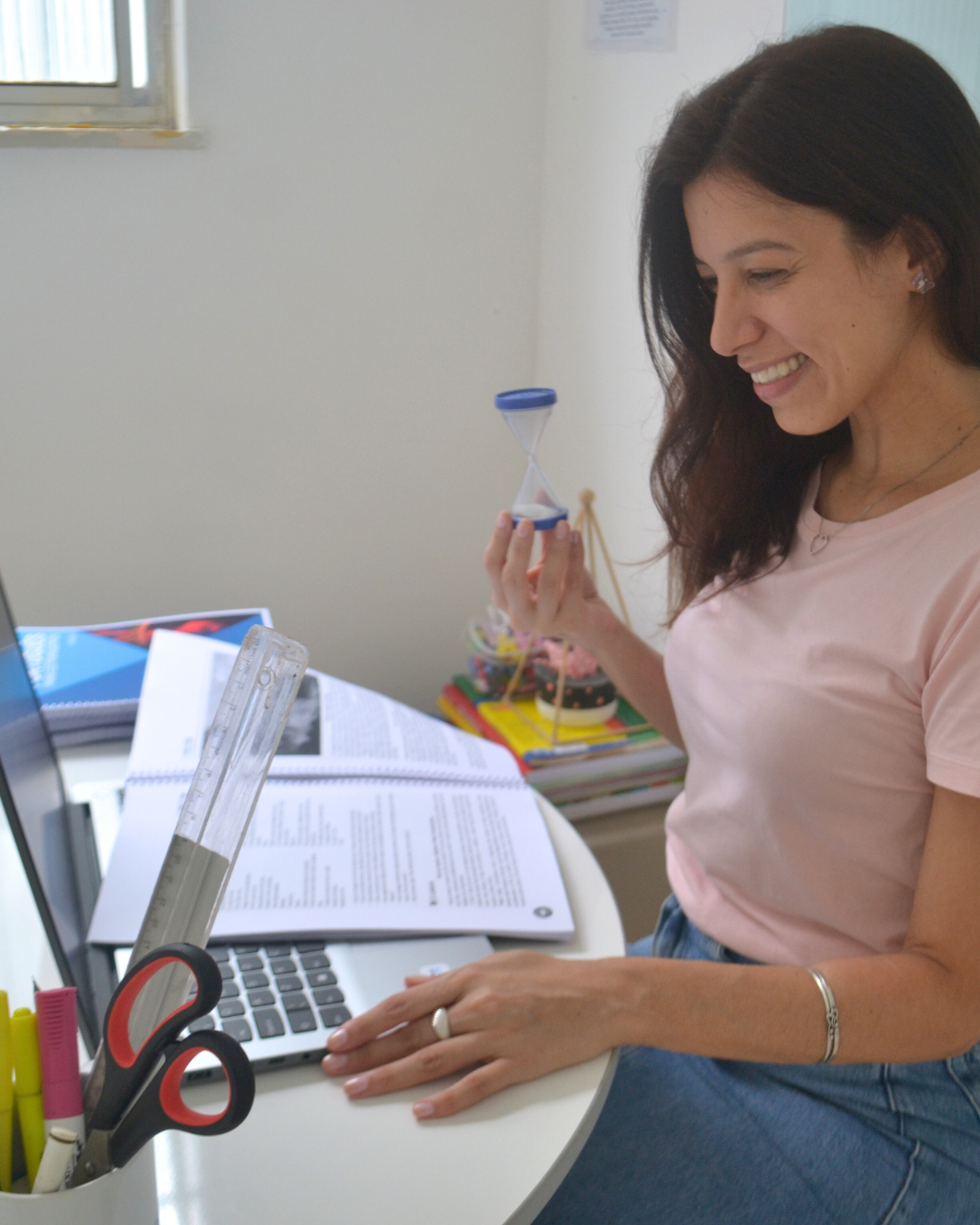
 If your focus is on speaking naturally and confidently, this Conversation Online Course is for you. With real-time pronunciation practice, listening comprehension activities, and engaging topics, you’ll feel more at ease in real-life conversations. The teacher will be 100% focused on your talking skills.
Wednesdays, 3:30–5:00 PM (BRT)
Flexible duration — learn at your own pace
Explore the conversation course here
Fully Personalized, Just for You

 Prefer one-on-one learning? Our Private Online Portuguese Classes are tailored entirely to your needs and schedule. You’ll work closely with a native teacher to target your specific goals, whether you’re preparing for a move to Brazil, studying for a language exam, or just want to go deeper at your own pace.
Flexible schedule
100% personalized lessons
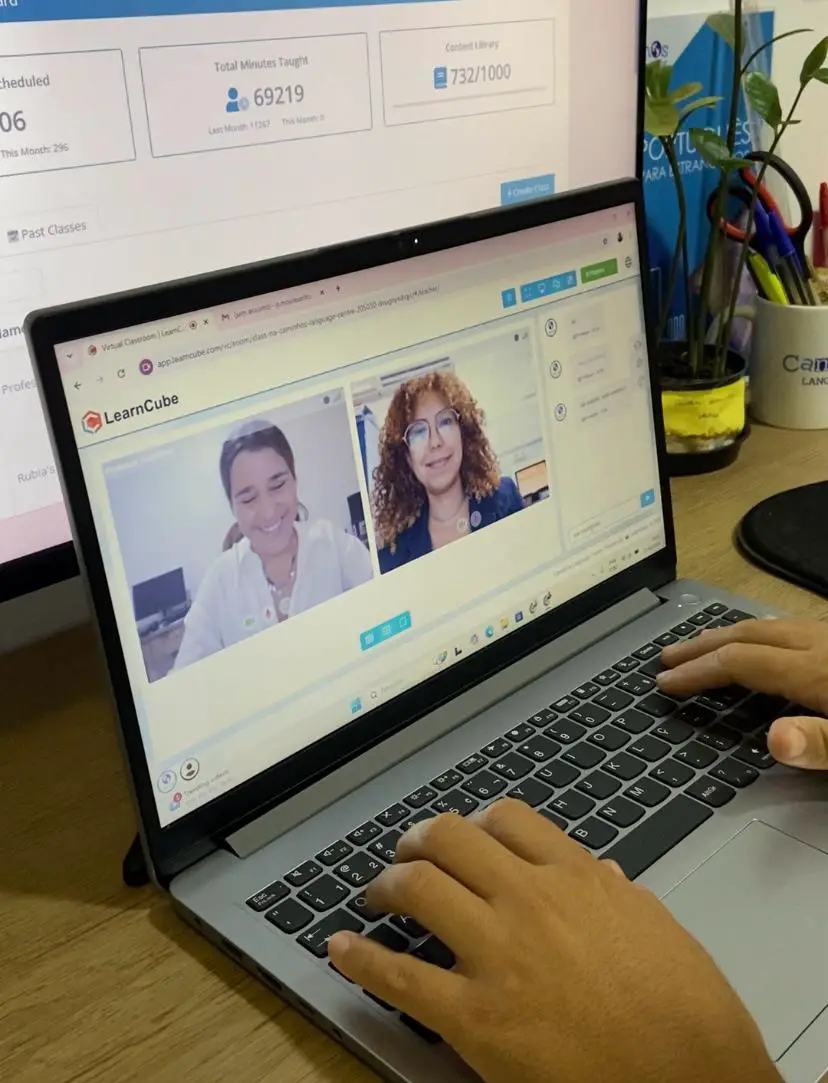
 Our next Regular Group Course kicks off on April 15 and it’s open to all levels, from A1 to C. Whether you’re a complete beginner or already on your way, there’s a spot for you in our vibrant online classroom.
All of our online classes take place on LearnCube, one of the most effective and intuitive platforms for language learning. With interactive tools and a smooth user experience, it brings every class to life, making your learning journey dynamic, engaging, and truly connected.
So, whether you choose a structured group course, a conversation-focused class, or fully personalized private lessons, we’re here to help you learn Portuguese online in a way that feels real and purposeful.
Explore all our course options and sign up today.
Let’s bring the warmth of Brazil to your screen — one class at a time.
Caminhos Language Centre is the largest and most exciting Portuguese school in Rio de Janeiro, Brazil. We have an excellent infrastructure, over 15 experienced Brazilian teachers, and a friendly multilingual support staff. We are the only school in Brazil able to offer Portuguese group courses throughout the year on 10 different levels. Moreover, our school also offers more than just Portuguese lessons for foreigners, we offer you the complete Rio de Janeiro experience. Every day we organize 100% free and fun activities for you to socialize and practice your Portuguese. We can also help you with a student visa for Brazil and accommodation in Rio de Janeiro. Follow us on Instagram for some Portuguese tips and news.
[ad_2]
Source link
[ad_1]
Unlock Lesson Notes and Transcripts for every single lesson. Sign Up for a Free Lifetime Account and Get 7 Days of Premium Access.
[ad_2]
Source link
[ad_1]
[ad_2]
Source link

[ad_1]
[ad_2]
Source link
[ad_1]
[ad_2]
Source link
[ad_1]
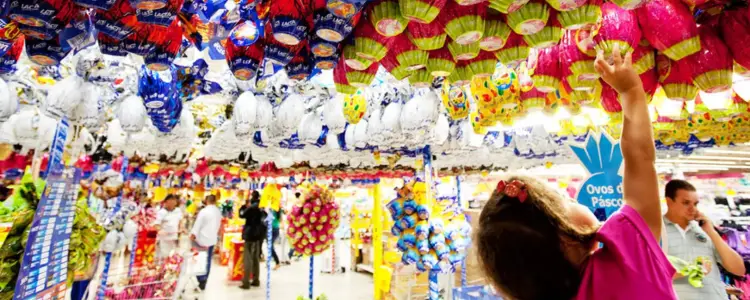
Brazilian Easter isn’t just a religious celebration; it’s a significant retail event, especially for the chocolate industry. One of the most distinctive sights during this season is the colorful display of chocolate Easter eggs hanging from supermarket ceilings. This tradition, deeply rooted in Brazilian culture, serves as a powerful marketing strategy that enhances consumer engagement and drives substantial economic activity.
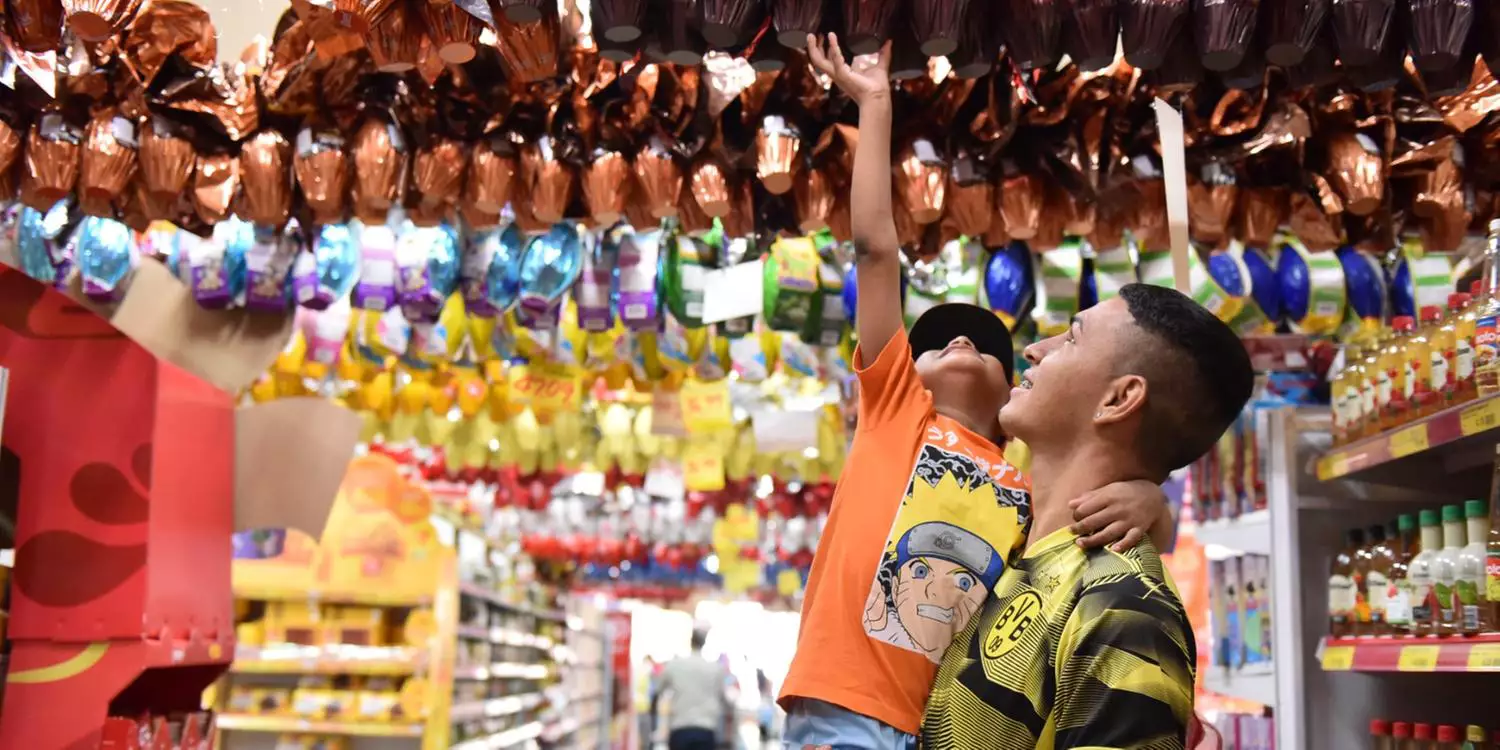
Brazilian Easter is a vibrant cultural event overflowing with traditions that showcase the country’s creativity, diversity, and love for family and food. While some aspects of Easter are familiar worldwide, Brazil has cultivated unique ways of celebrating.
In Brazil, one of the most iconic sights during Easter is the colorful display of chocolate eggs hanging

from supermarket ceilings. These decorations can be seen as early as February, transforming grocery aisles into festive tunnels filled with chocolate. This phenomenon isn’t just a marketing tactic; it has become a seasonal tradition that Brazilians eagerly anticipate each year.
Brazil is one of the largest consumers of chocolate in Latin America, and this seasonal spike highlights how deeply rooted the tradition of giving and receiving chocolate eggs is in Brazilian culture. From giant supermarkets to small corner shops, Easter eggs of all shapes and sizes dominate the shelves for weeks.

The practice of hanging Easter eggs from supermarket ceilings in Brazil began in the 1980s as a creative solution to optimize retail space and boost sales during the Easter season. This innovative idea was the result of a partnership between the chocolate manufacturer Lacta and the retail chain Lojas Americanas.
At the time, Magim Rodriguez, then president of Lacta, was looking for ways to expand product visibility in stores that had limited shelf space. During a visit to one of the Lojas Americanas locations, he noticed the vertical space available between the first and second floors and proposed the installation of hanging structures to suspend the chocolate eggs.
This strategy not only improved space utilization but also created a striking visual impact that immediately caught consumers’ attention. The result was a significant increase in Easter egg sales, cementing the practice as a retail tradition in Brazil.
Beyond logistics, this display method also protects delicate chocolate eggs from damage and helps create a festive, immersive shopping experience that encourages impulse buying, especially among children.
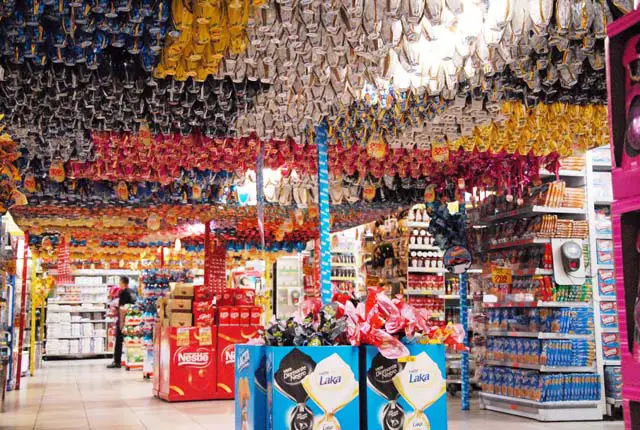
This visual merchandising tactic does more than just display products; it taps into consumers’ emotions. The overhead arrangement of colorful eggs evokes nostalgia and excitement, encouraging impulse purchases.
Retailers strategically place eggs of various sizes, brands, and price points to cater to a wide range of consumers, from budget-conscious shoppers to those seeking premium offerings. Moreover, the use of popular licensed characters and limited-edition designs adds an element of collectability, further driving consumer interest and sales.

 According to the Brazilian Association of the Chocolate, Peanut, and Candy Industry (ABICAB), the chocolate sector generated around R$ 3 billion during the 2024 Easter season alone. Over 10,000 tons of chocolate Easter eggs were produced, filling supermarket aisles across the country with colorful, hanging displays that have become a classic Brazilian Easter tradition.
Despite challenges such as rising cocoa prices and economic fluctuations, major retailers like Carrefour and GPA projected growth in chocolate sales, with expectations of up to 40% revenue increases during the Easter period. This resilience underscores the effectiveness of the hanging egg display strategy in stimulating consumer spending.

The Brazilian tradition of hanging Easter eggs from supermarket ceilings exemplifies how cultural practices can be leveraged as effective marketing tools. By creating visually appealing and emotionally resonant shopping environments, retailers not only honor cultural traditions but also drive significant economic activity. As this practice continues to evolve, it remains a testament to the powerful intersection of culture, marketing, and commerce in Brazil’s retail landscape.
Caminhos Language Centre is the largest and most exciting Portuguese school in Rio de Janeiro, Brazil. We have an excellent infrastructure, over 15 experienced Brazilian teachers, and a friendly multilingual support staff. We are the only school in Brazil able to offer Portuguese group courses throughout the year on 10 different levels. Moreover, our school also offers more than just Portuguese lessons for foreigners, we offer you the complete Rio de Janeiro experience. Every day we organize 100% free and fun activities for you to socialize and practice your Portuguese. We can also help you with a student visa for Brazil and accommodation in Rio de Janeiro. Follow us on Instagram for some Portuguese tips and news.
[ad_2]
Source link