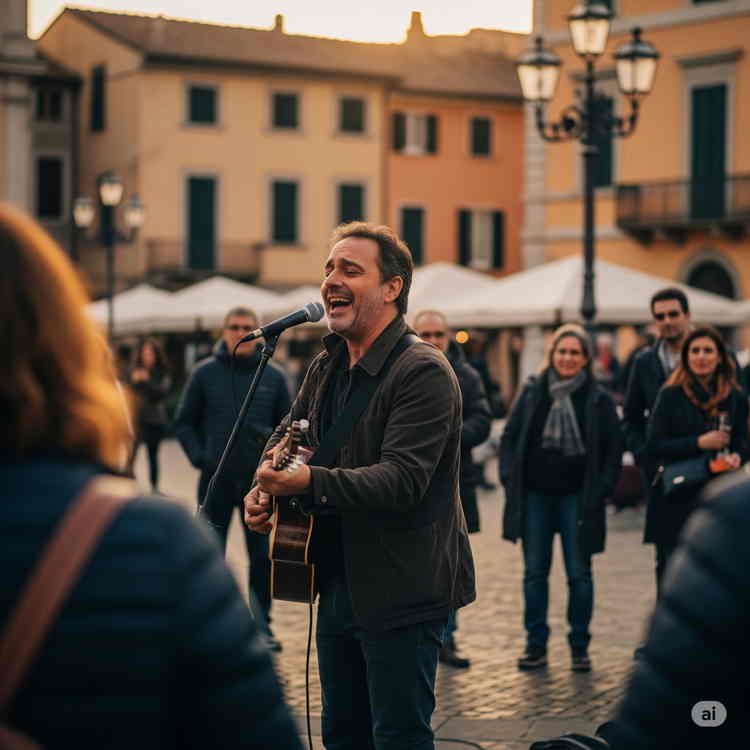
La musica è più di un semplice suono: è una forza che plasma stati d’animo e ricordi. È un linguaggio universale che può confortare, guarire e ispirare. Andrea Bocelli una volta ha detto: “C’è musica classica così bella da diventare popolare, e musica popolare così bella da diventare classica. Quando la musica è bella, è semplicemente bella”. Conosci le canzoni italiane più famose?
Music is more than just sound – it’s a force that shapes moods and memories. It’s a universal language that can comfort, heal, and inspire. Andrea Bocelli once said: “There is classical music so beautiful it becomes popular, and popular music so beautiful it becomes classical. When music is beautiful, it’s simply beautiful.” Do you know the most famous Italian songs?
Request blocked.
We can’t connect to the server for this app or website at this time. There might be too much traffic or a configuration error. Try again later, or contact the app or website owner.
If you provide content to customers through CloudFront, you can find steps to troubleshoot and help prevent this error by reviewing the CloudFront documentation.
Generated by cloudfront (CloudFront)
Request ID: QGQmiQbjznKYWmH0UNCA3GbtxPEVn82L-GWYvWKfTBtA1eunDfEQ8g==
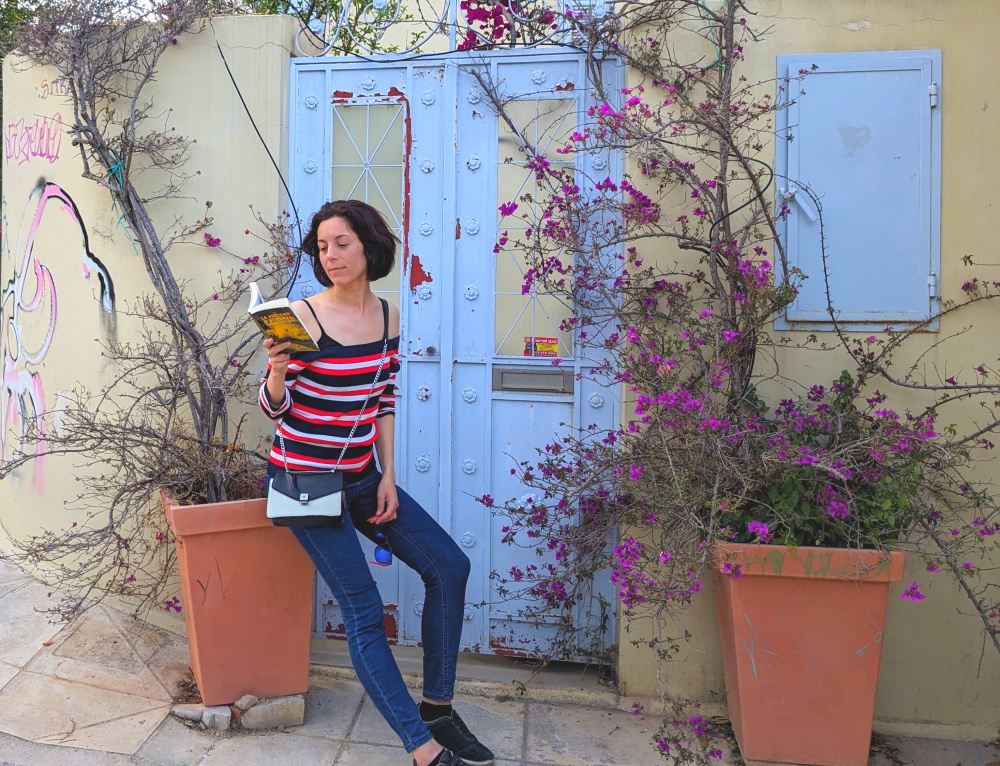
Яобожаюпутешествовать, хотя в последние годы моё отношение к путешествиям изменилось. Мне хочется путешествовать больше для встреч с людьми, чем для исследования новых мест любой ценой. Например, на турнир по нардам с любимым или на стажировку по русскому языку с группой студентов. Тем не менее, я думаю, что путешествия делают нас лучше. Вот почему.
I love traveling, even if my attitude towards it has changed in recent years. I travel more to meet people rather than to see new places at any price. For example, to a backgammon tournament with my partner, or to a Russian language stay with a group of students. However, I still believe that traveling makes me better. That’s why.
1. Когда я посещаю другие страны, я лучше понимаю другие культуры, даже когда они очень отличаются от культуры, к которой я привыкла. Я становлюсь более толерантной. Например, когда я посетила Боснию-Герцеговину, это было моим первым контактом с мусульманской культурой. В Боснии церкви построены рядом с мечетями, пример возможного сосуществования, который так отличается Ислама, который нам показывают по телевизору…
1. When I visit other countries I understand better other cultures, even when they are very different from the ones I am used to. I become more tolerant. I can see what is really going on, not what the media want to make us believe. For example, when I visited Bosnia-Herzegovina, it was my very first contact with the Muslim culture. In Bosnia churches are built next to the mosques, an example of possible coexistence, so different from the image of Islam the TV offers…
2. Через историю других стран можно попробовать предвидеть будущее. Например сегодня во многих странах мы может наблюдать некий подъём национализма. Просто посетите Берлин и посмотрите, до чего это довело Германию и немцев, получите представление о последствиях национализма.
2. I can try to anticipate the future through other countries’ history. For example, today we can observe a certain raise of nationalism in many countries. Well, just visit Berlin and see what the extreme nationalism did to Germany and German people, you’ll have an idea of the nationalism’s consequences.
3. Я понимаю, как я могла бы изменить себя к лучшему. Когда я была в Японии, меня очень тронуло, как внимательны японцы друг к другу. Как только заболевают, сразу надевают маску. Не говорят по телефону в общественном транспорте и кафе. После поездки в Японию возвращение во Францию было культурным шоком. Хотя у французов тоже есть, чему поучиться. Целый час сидеть в уютном кафе с книжкой после похода на рынок, радуюсь солнышку – это так по-французски! Говоря о солнышке, французы могут поучиться у британцев не жаловаться на погоду. Англичане и шотландцы готовы к прогулке даже в самый сильный дождь и ветер!
3. I understand how I could change myself for the better. When I was in Japan, I was really touched by how attentive the Japanese are to each other. As soon as they get sick, they immediately put on a mask. They don’t talk on the phone on public transport or in cafes. After visiting Japan, returning to France was a culture shock. Although the French have a lot to teach us, too. Sitting in a cozy cafe with a book for an hour after going to the market, enjoying the sunshine—that’s so French! Speaking of sunshine, the French could learn from the British not to complain about the weather. The English and Scots are ready to go for a walk even in the heaviest rain and wind!
4. Я понимаю, что некоторые мои проблемы проблемами вовсе не являются. В 2015 году я ездила в Хорватию. Эта страна пережила войну, воспоминания о ней ещё свежи. Несколько лет подряд братские народы бомбили и мучили друг друга. Или (здесь мне не нужно далеко ездить), моя русская бабушка может рассказать немало историй о её голодном детстве. Я стараюсь вспоминать об этих историях, когда мне грустно, что вместо 5-звёздного отеля я могу позволить себе только три звезды. Радуйтесь тому, что у вас есть (но стремитесь к большему).
4. I realize that some of my problems are not real problems at all. In 2015 I visited Croatia. The country had gone through the war, the memories are still fresh. For years the sister-countries bombed and tortured each other. Or (I don’t need to travel far here) I can talk to my Russian Gran who can tell me some stories about her hungry childhood. I try to keep those stories in mind when I feel unhappy because I can only afford a 3 stars hotel instead of 5 stars one. Be happy with what you have (It doesn’t mean you can’t strive for more).
5. Путешествия мотивируют меня учить новые языки. Лучший способ изучения языка – практика с носителями. Во Франции и в Англии люди уже не удивляются, когда иностранец может сказать пару слов на их языке, но в некоторых странах знание нескольких слов сразу всё меняет (а иногда и позволяет сэкономить много денег). Именно поездка в Японию вдохновила меня на изучение японского.
5. I’m more motivated to learn new languages. The best way of learning a language is to practice it with the native speakers. In France or in England people aren’t generally very impressed when foreigners try to mumble some words in local language, but in some countries learning a few words changes everything (and sometimes saves you a lot of money). It’s my trip to Japan that inspired me to learn Japanese.
6. Я понимаю, как мне повезло, что я просто-напросто могу путешествовать. Не все могут себе это позволить.
7. Я понимаю, что эмоции, впечатления и человеческое тепло дороже дорогих машин, модных гаджетов и брендов.
8. Я учусь правильно вести себя в трудных и непредсказуемых ситуациях.
6. I understand how lucky I am to simply be able to travel, not everybody can afford it today.
7. I understand that emotions, impressions and human contact are worth much more than expensive cars, new gadgets and brand clothes.
8. I learn how to behave myself in difficult and unpredictable situations.
9. Яболеебережноотношуськприроде. Ведь я настоящая горожанка и совсем не привыкла к контакту с животными. Я боюсь коров, я убегу от лошади! Я очень восхищаюсь людьми, которые живут в гармонии с животными, горами, погодой. Они считают человека не центром вселенной, а скорее одним из её элементов. Мне нравится такой подход.
9. I become more respectful of the nature. Being a town girl I’m not at all used to the contact with animals. When I see a cow, I’m scared. When a horse comes to me, I run away. I very much admire people living in harmony with animals, with mountains and the weather. They don’t consider man as the center of the universe, but rather as one if its elements. I like this philosophy.
10. А возвращаюсь я всегда с целой кучей новых проектов и идей. Не знаю, как так получается, но именно в пустой голове рождаются новые идеи и вдохновение.
10. And I always come back with my head full of new projects and ideas. I don’t know how it works, but it’s when your head is empty that new ideas and the inspiration emerge.
When people think of learning a new language, they often picture grammar books and vocabulary flashcards. But there’s a much more enjoyable and culturally rich way to immerse yourself: music. And if you’re learning Italian, exploring the world of cantautori italiani (Italian singer-songwriters) is one of the most effective — and emotional — paths to …
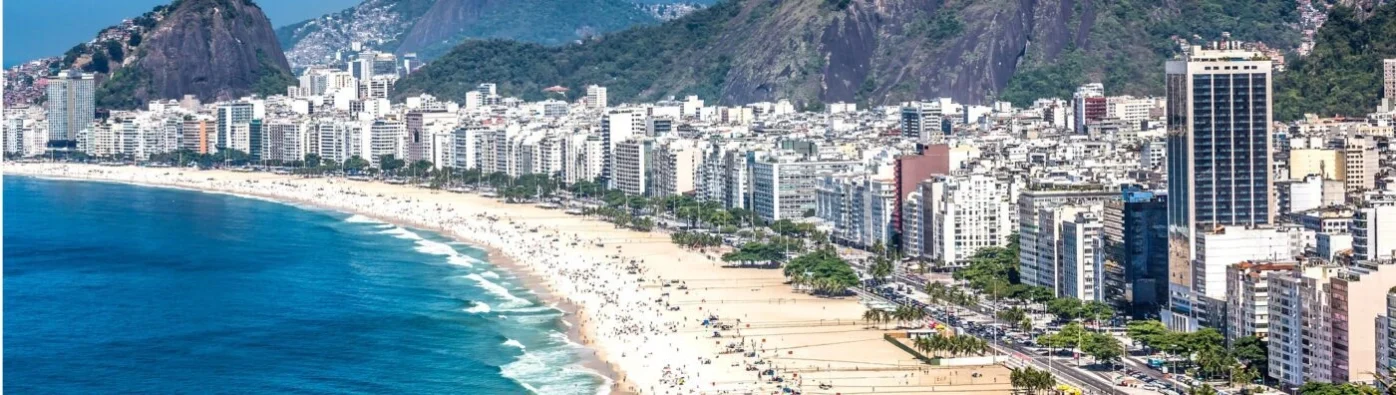
When we think of symbols of Rio de Janeiro, one of the first images that comes to mind is the beautiful black-and-white curves that make up the promenade of the city’s most famous beach: Copacabana. This neighborhood in Rio carries an extensive and fascinating history. Come and explore the history of Copacabana!
Copacabana in the 13th to 19th Century
In the early 13th century, the beach was called Sacopenapã (in Tupi, “path of the sacóis,” a common bird in the region). It was inhabited by the Tamoio Indigenous people. Over time, it was occupied by constructions such as the small Copacabana Chapel, which gave the neighborhood its name. In 1918, this chapel was demolished, and the Copacabana Fort was built in its place.
By 1900, this neighborhood was still a small village, with seaside houses and fishing and leisure boats docked on the sand. With the development of basic sanitation techniques, the beaches were cleaned, which significantly increased the area’s value.
The main problem, however, was access to the region. Until that point, it could only be reached through small dirt paths and roads, since Copacabana is surrounded by mountains that made transportation difficult. The trip to Copacabana was long, and the neighborhood had very little infrastructure to accommodate residents and visitors.
As part of Rio de Janeiro’s urbanization process, tunnels and roads were built to overcome these natural obstacles. In 1930, the Leme Tunnel (now called Túnel Novo, or “New Tunnel”) was inaugurated, making access easier. A few years later, in 1950, the Botafogo Tunnel (Túnel Velho, or “Old Tunnel”) was opened, connecting central Copacabana to the neighborhood of Botafogo.
With the construction of these tunnels, Copacabana was able to develop more quickly, attracting merchants, investors, residents, and tourists. In a short time, the neighborhood became one of the city’s most important, and real estate values followed the same path. With easier transportation, luxury buildings were erected, and tourism flourished.
When was Copacabana Beach established?
Copacabana Beach has its origins in the early 20th century. During that time, the beach was much wider, and the government undertook a land reclamation project to extend the sandy area, which led to the creation of the famous promenade.
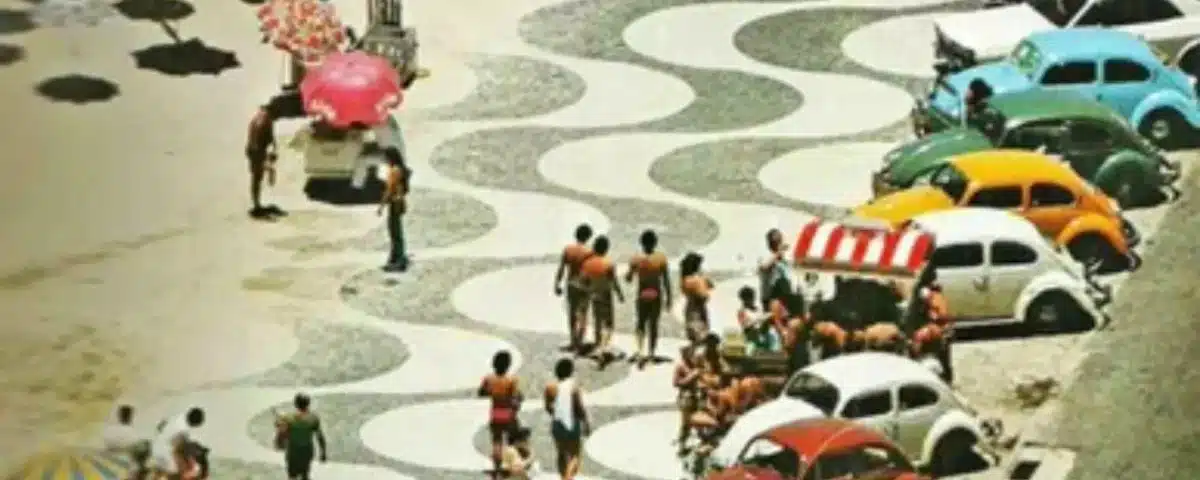
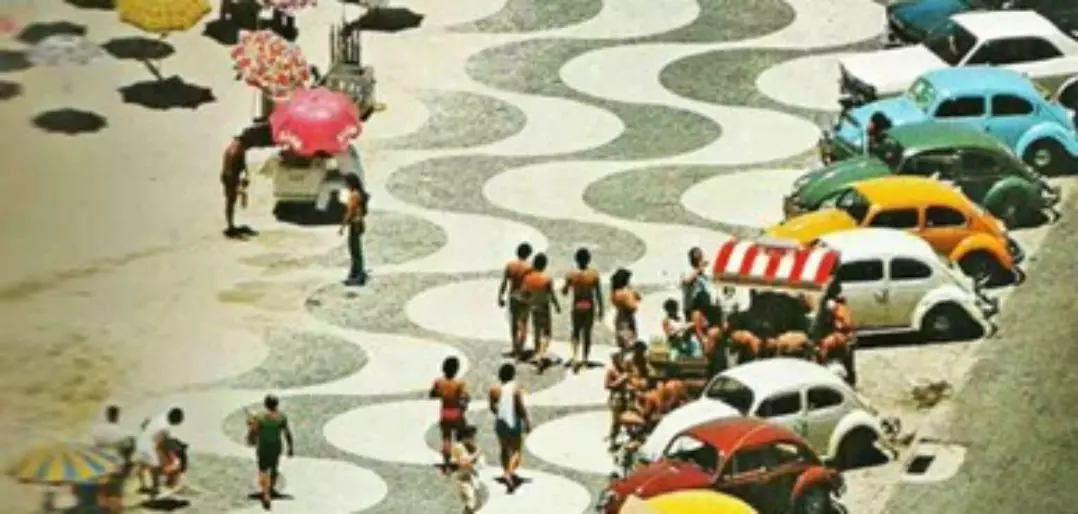
This neighborhood, located in Rio de Janeiro’s South Zone, is known for its diverse architectural styles. Here, you can find Art Deco buildings, such as the Copacabana Palace, alongside modern and luxurious constructions. A highlight of the area is the Copacabana promenade, designed by Roberto Burle Marx, which features beautiful Portuguese stone mosaics that resemble ocean waves.
Even today, the vertical growth of Copacabana is a hot topic. With the rise of tall buildings, the quality of air and natural light has been affected.
The landscape of Copacabana reflects the neighborhood’s cultural diversity very well: modern, classic, cosmopolitan, and traditional. Much of its historical architecture is preserved, even though there is constant debate about balancing modernization and preservation, especially when older buildings are renovated or replaced with newer ones. That’s why we often say Copacabana is the neighborhood where past and present are constantly meeting.
Copacabana’s Carnival and Political Legacy
When we talk about Copacabana’s history, we find many important moments in its collective memory. In the 1950s, Carnival grew, with large street parades and parties, giving the neighborhood recognition and turning it into a hotspot for events during that season. In the following decades, during Brazil’s Military Dictatorship, Copacabana, like other neighborhoods, became the stage for many protests and student and intellectualmovements. It was a gathering place for those who opposed the military regime and political repression.
Copacabana’s New Year’s Eve and Transformation
From the 1980s onward, the neighborhood gained another reason to make headlines: the Copacabana New Year’s Eve. The famous fireworks display on the beach attracts millions of people every year and has become a tradition that continues to draw tourists from all over the world.
And, of course, not everything is perfect. With rising property values also came a process of gentrification. Between the 1990s and 2000s, many residents had to leave due to skyrocketing real estate prices. Tourism growth led to the construction of new hotels and modernization of the neighborhood’s infrastructure.
Today, the neighborhood faces challenges related to public safety and environmental preservation.
One of Rio’s greatest symbols and a true Brazilian postcard image, Copacabana is a world-renowned tourist destination. With so much beauty and cultural diversity, it’s impossible not to love the Little Princess of the Sea.
Caminhos Language Centre is the largest and most exciting Portuguese school in Rio de Janeiro, Brazil. We have an excellent infrastructure, over 15 experienced Brazilian teachers, and a friendly multilingual support staff. We are the only school in Brazil able to offer Portuguese group courses throughout the year on10 different levels. Moreover, our school also offers more than just Portuguese lessons for foreigners, we offer you the complete Rio de Janeiro experience. Every day we organize 100% free and fun activities for you to socialize and practice your Portuguese. We can also help you with a student visa for Brazil and accommodation in Rio de Janeiro. Follow us onInstagram for some Portuguese tips and news.
Tired of having to stop and pick up a dictionary every time you come across a new word?
Well, there is a pain-free way to look up words if you’re learning with our learning system.
It’s called the audio dictionary.
But first, if you don’t yet have access to our language learning system, sign up for a free lifetime account right now.
Just click the link in the description to get your free lifetime account.
What is the audio dictionary?
The audio dictionary is our free on-site dictionary with audio pronunciation.
And you’ll find it in the vocabulary drop-down menu or by hovering over the search icon in the top right corner of the site.
Just type or paste in any word you want to look up.
The dictionary gives you the meaning, transliteration, and audio pronunciation.
Best of all, it’s available to all users.
So if you’re a member, you already have access.
How to look up words without sidelining your learning.
Now, let’s talk about how to look up words without sidelining your learning.
I don’t know about you, but when I’m learning, stopping everything to grab a dictionary every single time I find a new word can get frustrating, especially if there are a lot of new words.
That’s where the audio dictionary comes in.
So how does it work?
Well, if you’re taking a lesson on the site, you can just hover over the search icon, type or paste in the word, and get the meaning without having to stop or leave the lesson.
How to save and master words for good.
We know it’s easy to forget the new words you learn, and that’s why the audio dictionary connects with your word bank.
So you can send words from the dictionary to the word bank.
Think of the word bank as your extended brain.
It’s where you can save keywords and phrases for later.
And how it works is while you’re reviewing words, just select the ones you want to save and click add selected words to word bank at the bottom.
And it’s not just for storage.
You can use the word bank to review your words with a slideshow or even create printable vocabulary lists, which is pretty cool.
Just export your words as a PDF or click on the printer friendly option and print.
So if you want to learn the language and get access to these learning tools and our learning system, sign up for a free lifetime account right now.
Just click the link in the description to get your free lifetime account.
Welcome to the 2000 Core Turkish Words and Phrases video series!
Each lesson will help you learn new words, practice, and review what you’ve learned.
Ok! Let’s get started! First is…
WORD 1
(NORMAL SPEED)
nem
(NORMAL SPEED)
“humidity”
(NORMAL SPEED)
nem
(SLOW)
nem
(NORMAL SPEED)
“humidity”
(NORMAL SPEED)
Düşük nemli hava çok kuru hissedilir.
(NORMAL SPEED)
“With low humidity the air feels dry.”
(SLOW)
Düşük nemli hava çok kuru hissedilir.
WORD 2
(NORMAL SPEED)
rüzgar
(NORMAL SPEED)
“wind”
(NORMAL SPEED)
rüzgar
(SLOW)
rüzgar
(NORMAL SPEED)
“wind”
(NORMAL SPEED)
Rüzgar gerçekten şiddetli.
(NORMAL SPEED)
“The wind is really strong.”
(SLOW)
Rüzgar gerçekten şiddetli.
WORD 3
(NORMAL SPEED)
Dolu
(NORMAL SPEED)
“sleet”
(NORMAL SPEED)
Dolu
(SLOW)
Dolu
(NORMAL SPEED)
“sleet”
(NORMAL SPEED)
Dolu halinde, dondurucu yağmur damlaları çıplak deriye çarptığında çok acıtır.
(NORMAL SPEED)
“Sleet, freezing rain drops, stings when it hits bare skin.”
(SLOW)
Dolu halinde, dondurucu yağmur damlaları çıplak deriye çarptığında çok acıtır.
WORD 4
(NORMAL SPEED)
buzlanmak
(NORMAL SPEED)
“ice over”
(NORMAL SPEED)
buzlanmak
(SLOW)
buzlanmak
(NORMAL SPEED)
“ice over”
(NORMAL SPEED)
Köprüler, yolun geri kalanından önce buz tutacak.
(NORMAL SPEED)
“Bridges will ice over before the rest of the roadway.”
(SLOW)
Köprüler, yolun geri kalanından önce buz tutacak.
WORD 5
(NORMAL SPEED)
gök gürültüsü
(NORMAL SPEED)
“thunder”
(NORMAL SPEED)
gök gürültüsü
(SLOW)
gök gürültüsü
(NORMAL SPEED)
“thunder”
(NORMAL SPEED)
Gök gürültüsü şimşek çaktığında gökyüzünde yayılan sestir.
(NORMAL SPEED)
“Thunder is the sound of lightning expanding the air it passes through.”
(SLOW)
Gök gürültüsü şimşek çaktığında gökyüzünde yayılan sestir.
WORD 6
(NORMAL SPEED)
bunaltıcı
(NORMAL SPEED)
“muggy”
(NORMAL SPEED)
bunaltıcı
(SLOW)
bunaltıcı
(NORMAL SPEED)
“muggy”
(NORMAL SPEED)
Yüksek nemde hava çok bunaltıcı hissediliyor
(NORMAL SPEED)
“In high humidity the air feels muggy.”
(SLOW)
Yüksek nemde hava çok bunaltıcı hissediliyor
WORD 7
(NORMAL SPEED)
dondurucu seviyenin altında
(NORMAL SPEED)
“below freezing”
(NORMAL SPEED)
dondurucu seviyenin altında
(SLOW)
dondurucu seviyenin altında
(NORMAL SPEED)
“below freezing”
(NORMAL SPEED)
dondurucu seviyenin altında hava
(NORMAL SPEED)
“below freezing temperatures”
(SLOW)
dondurucu seviyenin altında hava
WORD 8
(NORMAL SPEED)
rüzgar soğuğu
(NORMAL SPEED)
“wind chill”
(NORMAL SPEED)
rüzgar soğuğu
(SLOW)
rüzgar soğuğu
(NORMAL SPEED)
“wind chill”
(NORMAL SPEED)
Rüzgar soğuğu, dışarıda hissedilen gerçek sıcaklıktır.
(NORMAL SPEED)
“Wind chill is how cold it really feels outside.”
(SLOW)
Rüzgar soğuğu, dışarıda hissedilen gerçek sıcaklıktır.
WORD 9
(NORMAL SPEED)
sıfırın altında
(NORMAL SPEED)
“below zero”
(NORMAL SPEED)
sıfırın altında
(SLOW)
sıfırın altında
(NORMAL SPEED)
“below zero”
(NORMAL SPEED)
Derece sıfır santigratın altına düştüğünde su donar.
(NORMAL SPEED)
“Water will freeze when the temperature falls below zero degrees Celsius.”
(SLOW)
Derece sıfır santigratın altına düştüğünde su donar.
WORD 10
(NORMAL SPEED)
açılmak
(NORMAL SPEED)
“clear up”
(NORMAL SPEED)
açılmak
(SLOW)
açılmak
(NORMAL SPEED)
“clear up”
(NORMAL SPEED)
Havanın açılmasını umuyorum ki biz de pikniğe gidebilelim.
(NORMAL SPEED)
“I am hoping for the weather to clear up so we can go on our picnic.”
(SLOW)
Havanın açılmasını umuyorum ki biz de pikniğe gidebilelim.
PRACTICE/REVIEW
Let’s review. Respond to the prompts by speaking aloud. First, you will hear a word or phrase in English. Respond in Turkish, then repeat after me, focusing on pronunciation.
Ready?
(Do you remember how to say “humidity?” Review 1)
(3)
(2)
(1)
nem
(1)
nem
(And how to say “wind?” Review 2)
(3)
(2)
(1)
rüzgar
(1)
rüzgar
(What about “sleet?” Review 3)
(3)
(2)
(1)
Dolu
(1)
Dolu
(Do you remember how to say “ice over?” Review 4)
(3)
(2)
(1)
buzlanmak
(1)
buzlanmak
(Let’s try “thunder!” Review 5)
(3)
(2)
(1)
gök gürültüsü
(1)
gök gürültüsü
(What about “muggy?” Review 6)
(3)
(2)
(1)
bunaltıcı
(1)
bunaltıcı
(Now, let’s see if you remember how to say “below freezing!” Review 7)
(3)
(2)
(1)
dondurucu seviyenin altında
(1)
dondurucu seviyenin altında
(Another one! What about “wind chill?” Review 8)
(3)
(2)
(1)
rüzgar soğuğu
(1)
rüzgar soğuğu
(Do you remember how to say “below zero?” Review 9)
(3)
(2)
(1)
sıfırın altında
(1)
sıfırın altında
(And finally, do you remember how to say “clear up?” Review 10)
Nel nostro mondo moderno, in cui siamo abituati a scorrere contenuti velocemente, saltando da un post a un video e a una notifica, cosa succede se ci fermiamo mezz’ora? Cosa succede se ci prendiamo un momento per leggere con calma? Ti piace fare delle pause? Ti piace leggere? C’è una nuova rivista italiana online, WomenLife , dedicata a chi vuole conoscere gli ultimi libri di grido in Italia, episodi storici particolari, a chi ama lo spettacolo, il vino, la cucina, viaggiare…
In our modern world, where we’re used to scrolling quickly through content, jumping from a post to a video to a notification, what happens if we stop for half an hour? What happens if we take a moment to read slowly, without rushing? Do you enjoy taking breaks? Do you enjoy reading? There’s a new Italian online magazine, WomenLife , dedicated to those who want to discover the latest bestselling books in Italy, intriguing moments from history, and who love entertainment, wine, food, and travel…
Hello, and welcome to the Culture Class- Holidays in Russia Series at RussianPod101.com. In this series, we’re exploring the traditions behind Russian holidays and observances. I’m Jenny, and you’re listening to Season 1 Lesson 18 – Pentecost.
In this lesson, we will take a look at one of the main Orthodox holidays in Russia, called Trinity Sunday, or in Russian, День святой Троицы (Den’ svyatoy Troitsy). This is the day on which it’s said that the Holy Spirit, which in Russian is Святой дух (Svyatoy dukh), descended upon the Apostles. Trinity Sunday is observed every year on the fiftieth day after Easter, which is why it’s also often called “Pentecost.”
Now, before we go into more detail, we’ve got a question for you-
What tree do the Orthodox Christians in Russia consider a symbol of the Trinity?
If you don’t already know, you’ll find out a bit later, so keep listening.
According to the Bible, Jesus Christ appeared before his disciples, the apostles, for forty days after his Resurrection, which in Russian is referred to as Воскрешение (Vaskresheniya). On the last day, while bidding them farewell, Jesus promised to send them a Comforter – the Holy Spirit. That day, the Holy Spirit descended on the apostles in the forms of fiery tongues, and they began praising God in various languages they did not know until then.
Nowadays, the traditions of celebrating this holy occasion in Russia are being revived. Early in the morning, Orthodox Christians attend a festive church service. Churches and homes are customarily decorated with greenery – grass, flowers, and tree branches. Such greenery is a common symbol of life, and in this way, the people thank God for giving them a new life through baptism. It’s believed that after being blessed in church, the bouquets of flowers and branches used in these ceremonies receive curative powers.
For Trinity Sunday, people usually prepare various egg-based dishes, making crepes, or блины (bliny) as they’re known in Russian, as well as stuffed buns, called пирожки (pirashki), and kissel. On this day, many people visit their families, and some consciously seek out and spend time among nature. Many cities hold folk festivities with concerts, competitions, and performances.
Traditionally, on Trinity Sunday, people should not engage in physical labor like doing laundry, tidying up, sewing, or any other work except feeding and watering pets and livestock.
So, returning to our quiz, what tree do Orthodox Christians in Russia consider to be the symbol of the Trinity?
The answer is the birch tree, or in Russian береза (beryoza). The birch has been the symbol of Russia since ancient times, and many folk beliefs, proverbs, and sayings are connected to it.
So listeners, how did you like this lesson? Did you learn something new?
Is Trinity Sunday celebrated in your country?
Leave a comment at RussianPod101.com, and I’ll see you in the next lesson!






 By 1900, this neighborhood was still a small village, with seaside houses and fishing and leisure boats docked on the sand. With the development of basic sanitation techniques, the beaches were cleaned, which significantly increased the area’s value.